March 26, 2025
Kruger National Park Camping Road Trip – The Ultimate Self-Drive Safari Experience
Dreaming of falling asleep to the sounds of howling hyena and truly living under the stars with the elephants? This blog is telling you all about camping and self-traveling inside Africa's largest national park.
The National Park - Our Journey
How Did We Travel?
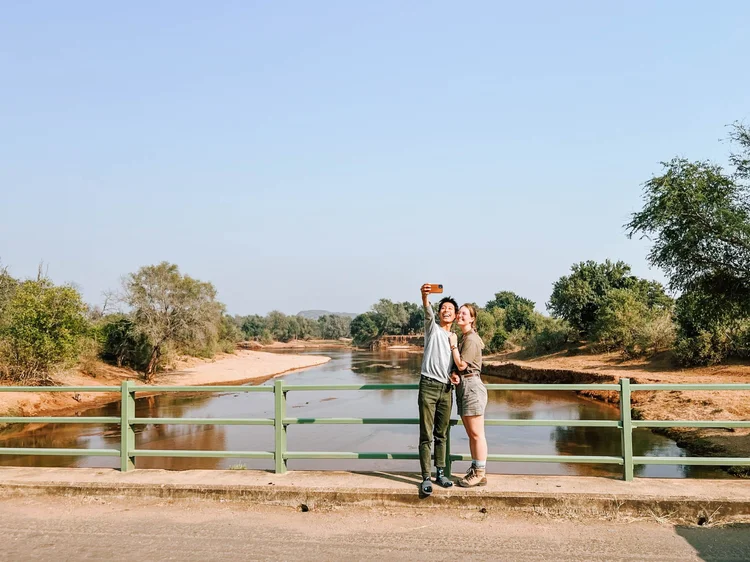
We traveled Kruger National Park in a small rental car. Our route took us from winter to a felt summer - all the way from the south near Malelane to the north at Punda Maria.
Tip: a guide booklet. As soon as you arrive at the gate or a rest camp, buy a guide booklet from the national park. Ours was called AP & Guide. In addition to a detailed map, you'll find information on restrooms, viewpoints, picnic areas and suggested routes. The map also provided an overview of all the wildlife living there, where to find them, and information on vegetation, climate and soil.
The southern part of the national park is particularly known for spectacular big cat sightings. Here, the density of predators and animals is high. In hindsight, we would have liked to spend more time in this area up to Skukuza Rest Camp, as we were still trying to find our perfect daily routine. The density of animals decreases slightly the further north you go. Around Mopani Rest Camp, many mopani trees grow. While elephants and squirrels love them, other animals are not so fond of them. That doesn't have to mean anything - one morning we had a spectacular sight of a pride of lions on the run.
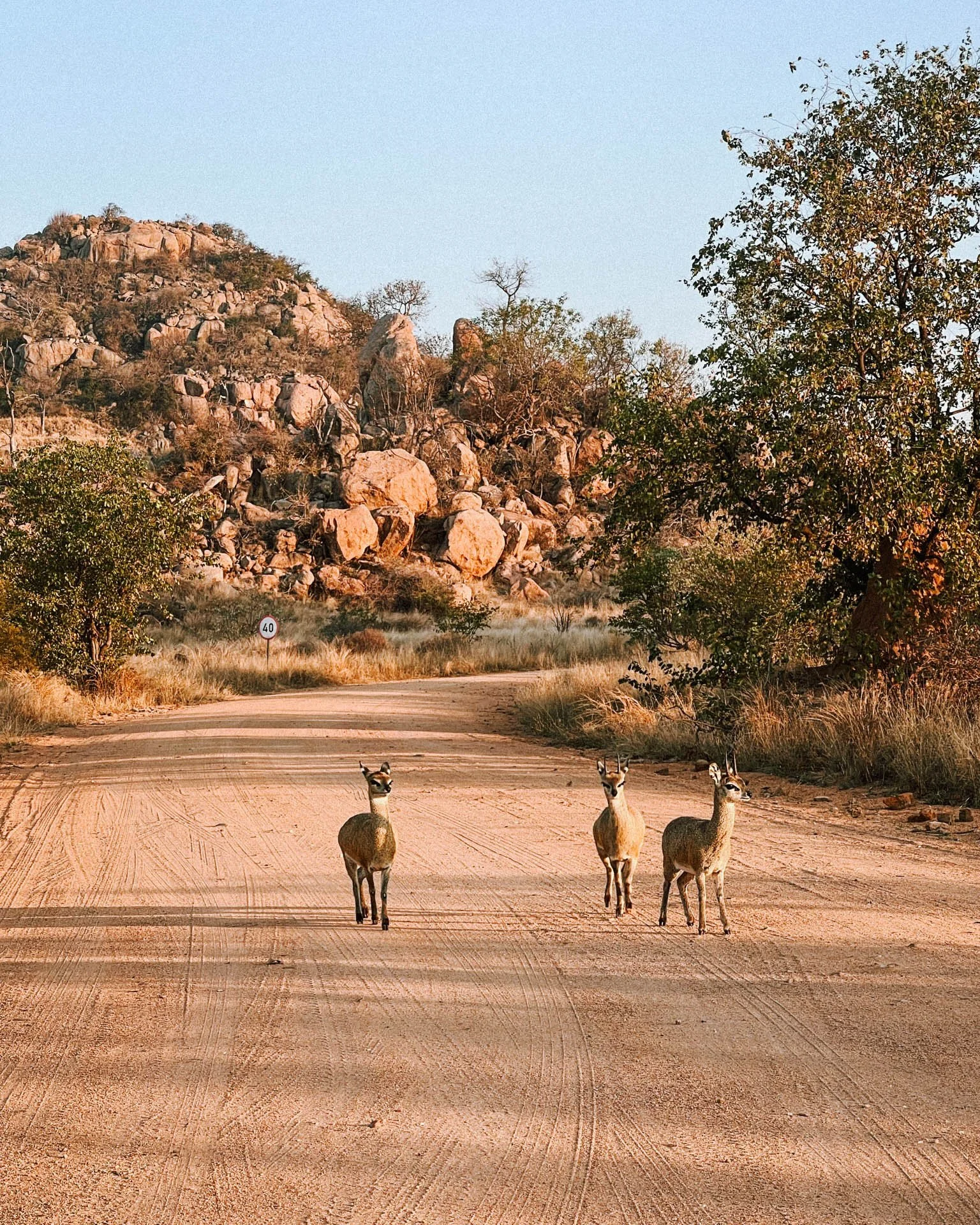
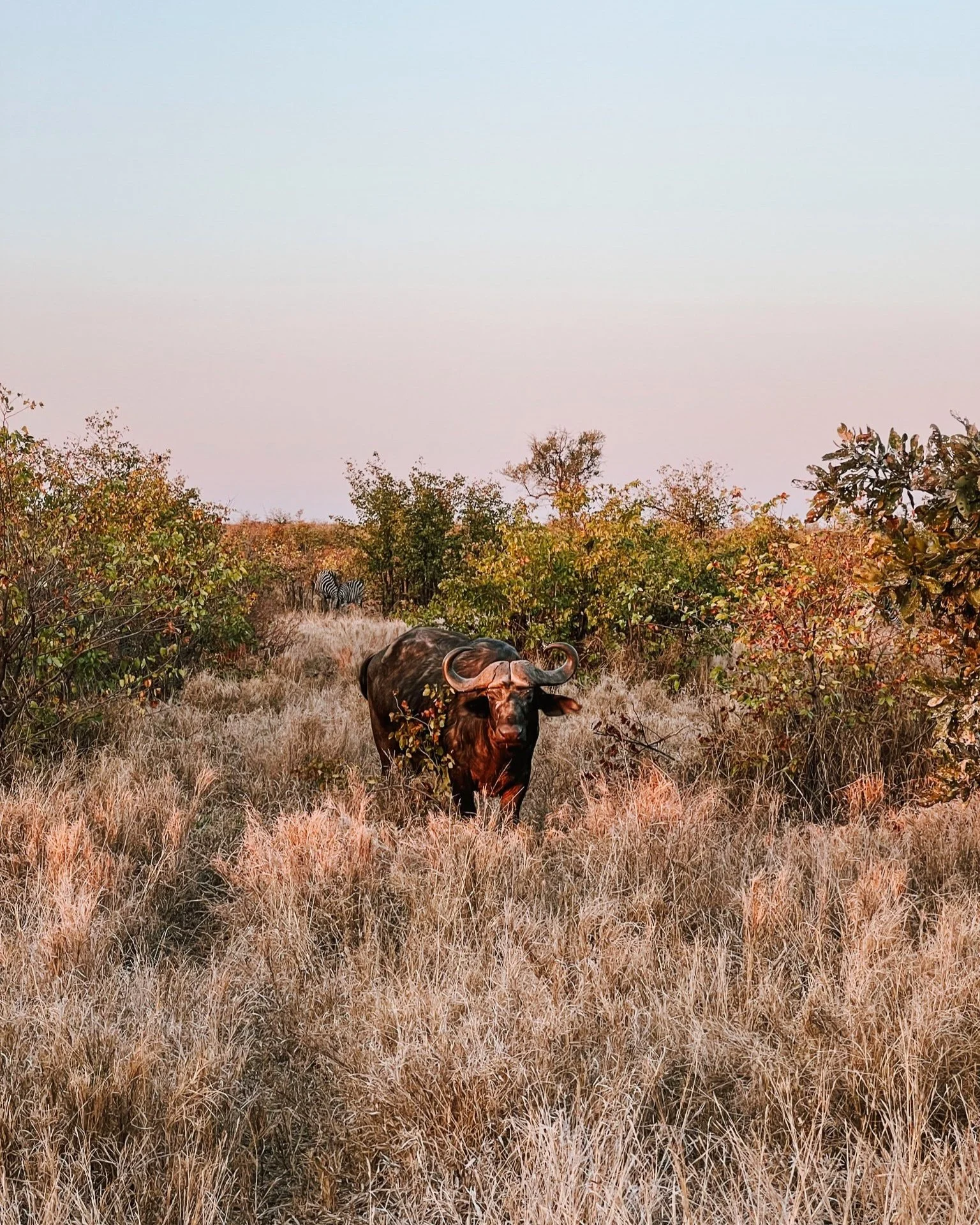
The northern part of the national park is known for excellent birding and fewer tourists. Here you'll find countless colorful birds, but we also did not miss out on mammals - like a wild dog we encountered in Punda Maria.
The larger camps offer a gas station, so don't worry, you don't have to leave the national park to get your car some dinosaur juice. The main roads in the park are paved and well maintained, but also the gravel roads were reliably accessible even with our small car.
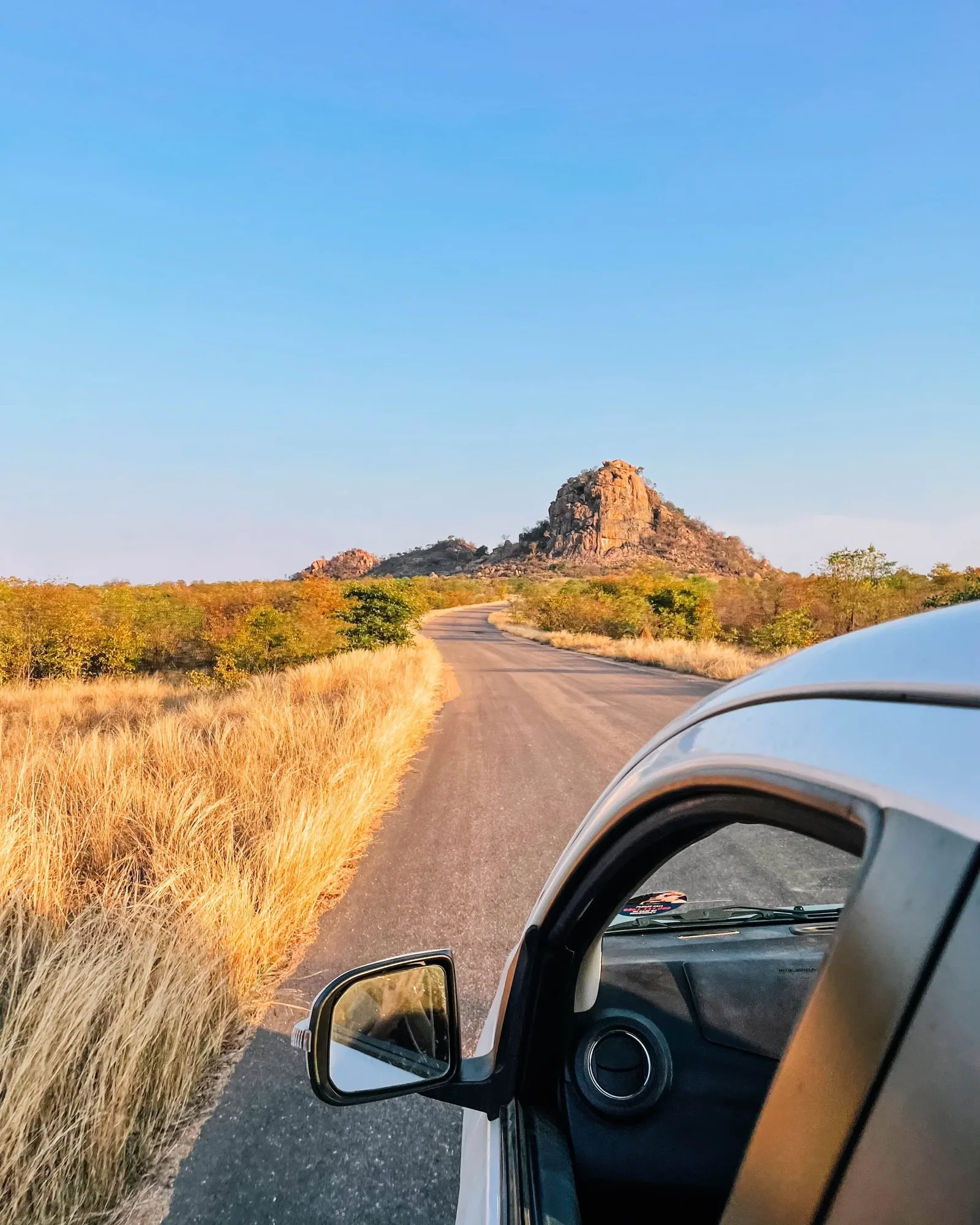
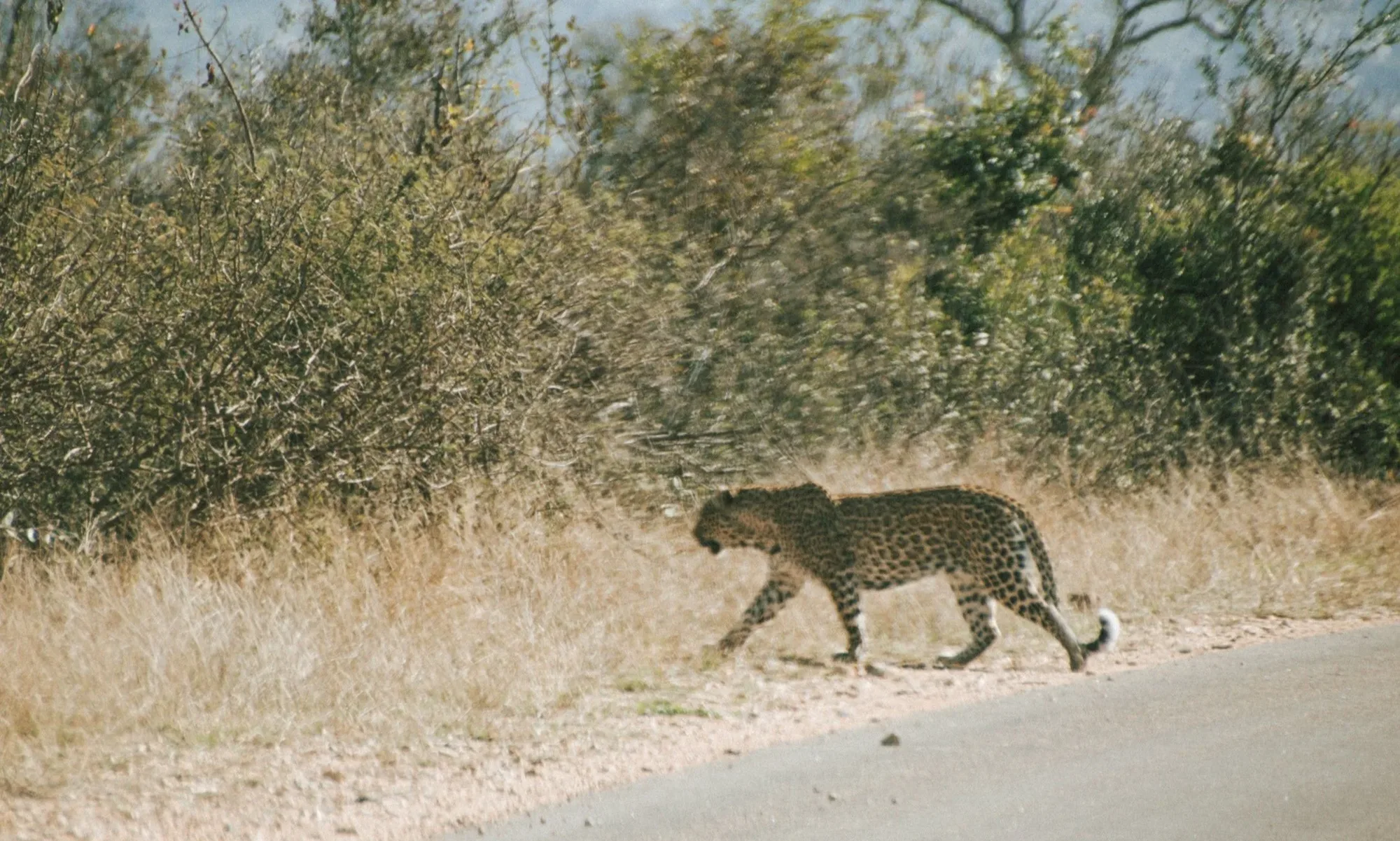
The leopard was the first animal we saw after we entered the national park
What Did We Do?
Activities can be booked at the rest camp, such as guided walking safaris and guided game drives.
We highly recommend the walking safari. It's not about experiencing animals up close but getting to know nature precisely. You wake up very early with the tour group and learn interactively about what the animals eat in the bush, how to tell the droppings, and what tracks can be read from the ground.
We also did a guided game drive. Unfortunately, we'd much rather recommend doing a safari in a private game reserve, because our guide was inattentive, and drove along the main road unenthusiastically at speed limit. That did not add any extra value for us. In the 25-seater, there were many clueless tourists who were in the bush for the first time and would have liked to learn more.
Etiquette and Survival Tips by Evelyne
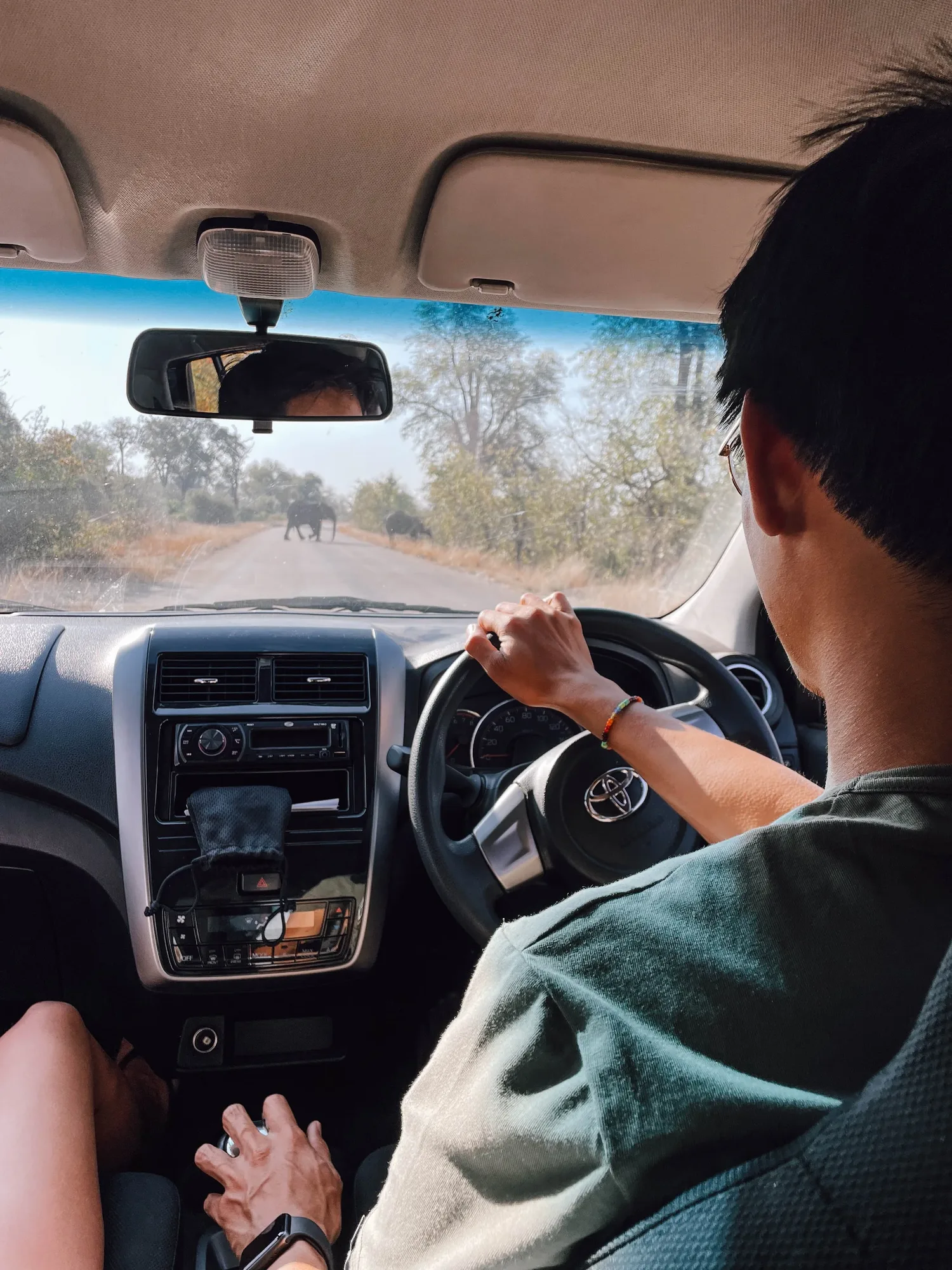
- Always give animals enough space. If you see a group of zebras wanting to cross the road (zebra crossing) - or any other animal, don't get too close and let them cross the road safely.
- Take it slow! You're not on the run, so drive slowly enough that you can always stop for the animals - from dung beetles and snakes to elephants and lions. Luckily, speeding is illegal.
- Don't feed animals. Once wild animals have tasted human food, they will try it again. This is unnatural for the animals and dangerous for people. Always store and dispose of garbage properly.
- Special elephant advice: be particularly careful around elephants, especially bulls and herds with cubs. They are unpredictable and can easily attack any car.
- Make life difficult for poachers by never ever publishing pictures of rhinos, especially not with location tags. They are particularly threatened by poaching.
- Leave no trace. Don't leave any traces and take nothing but moments and memories with you. Also, stay on marked paths with your car and don't off-road.
- Plan your toilet break well and only leave the car at marked places. Observe and listen to your surroundings carefully before getting out.
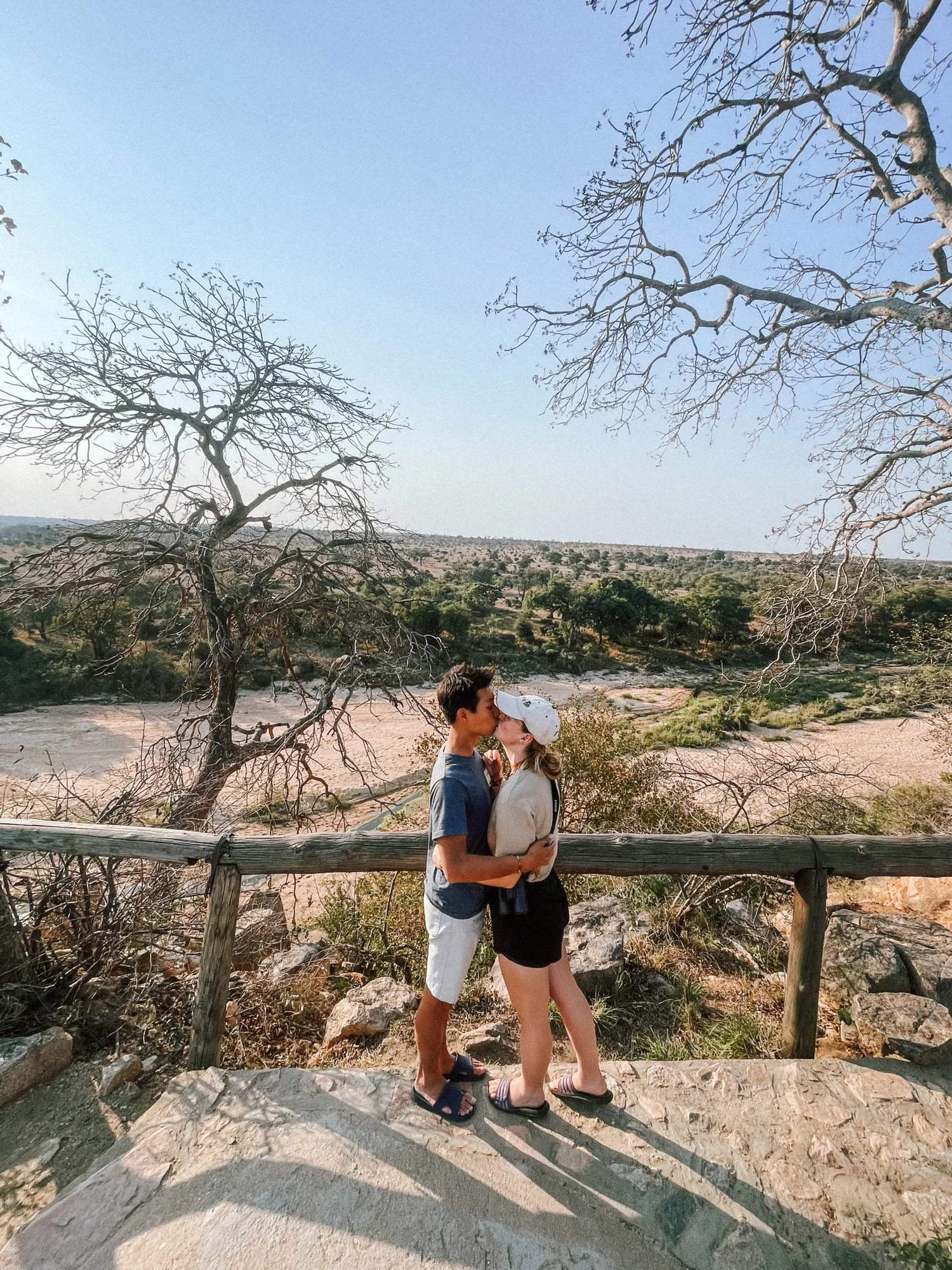
Only leave the car at marked places, such as this view point
A Wild Highlight
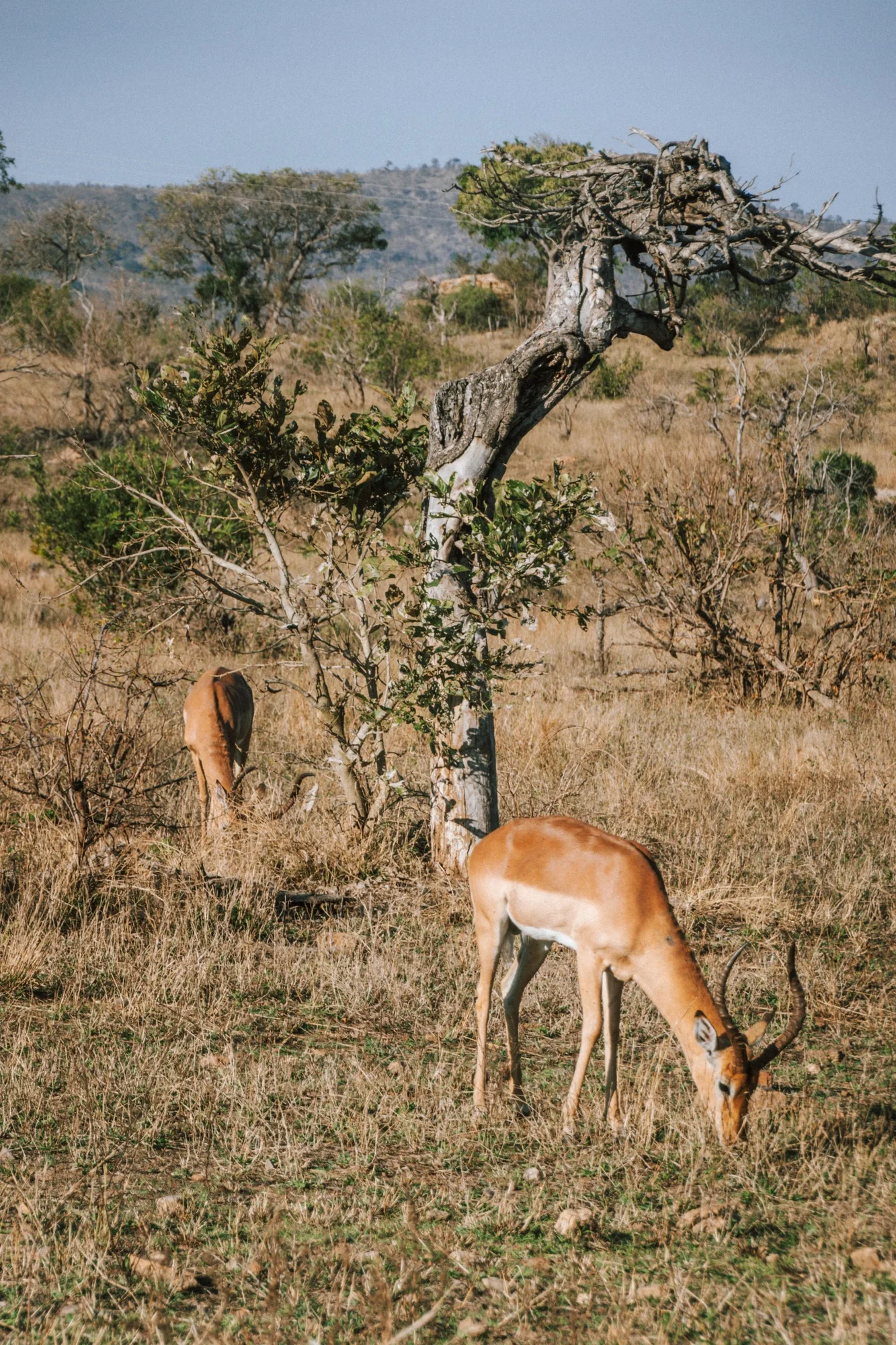
Two impalas in the bush
The Perfect Day
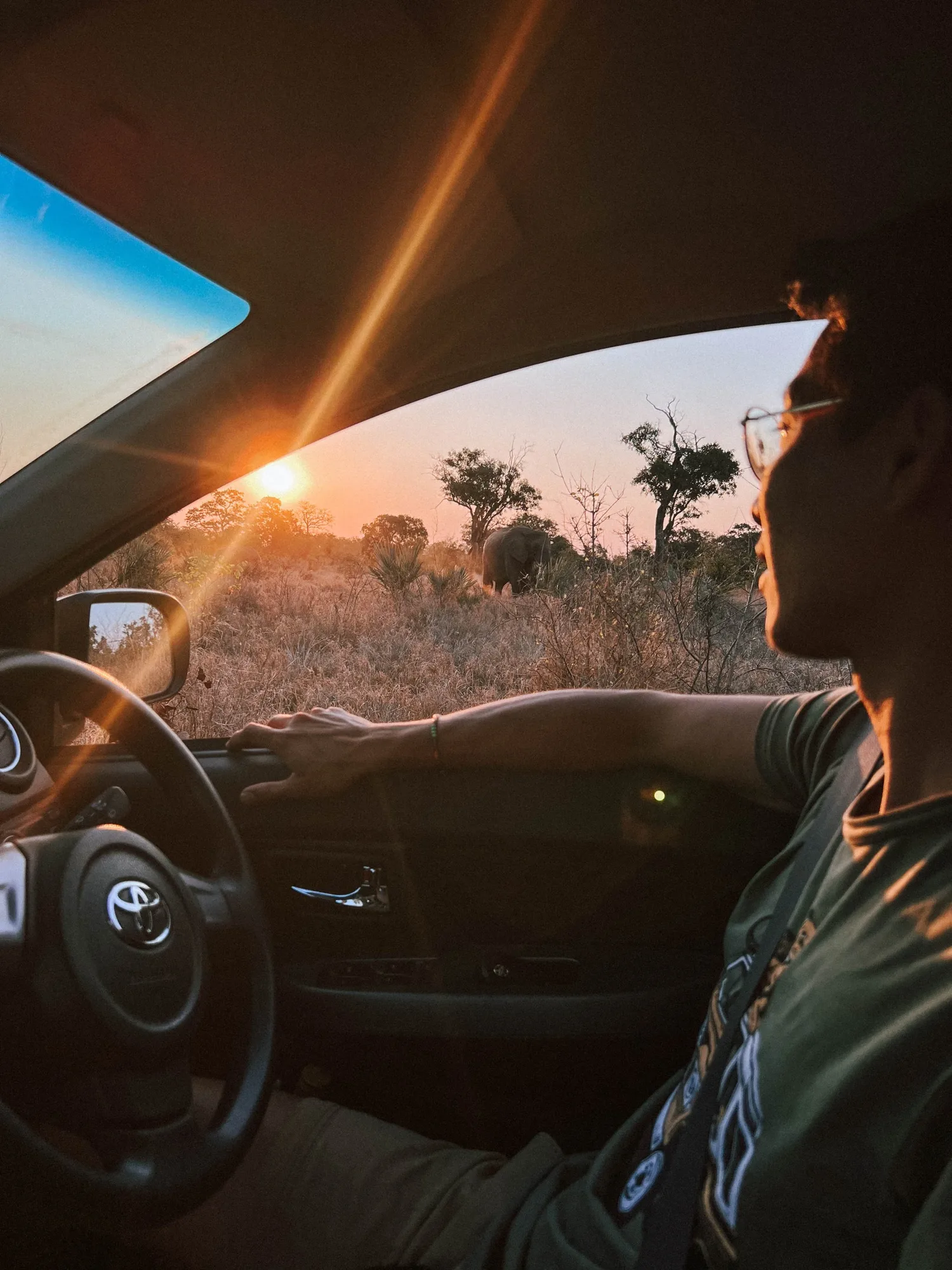
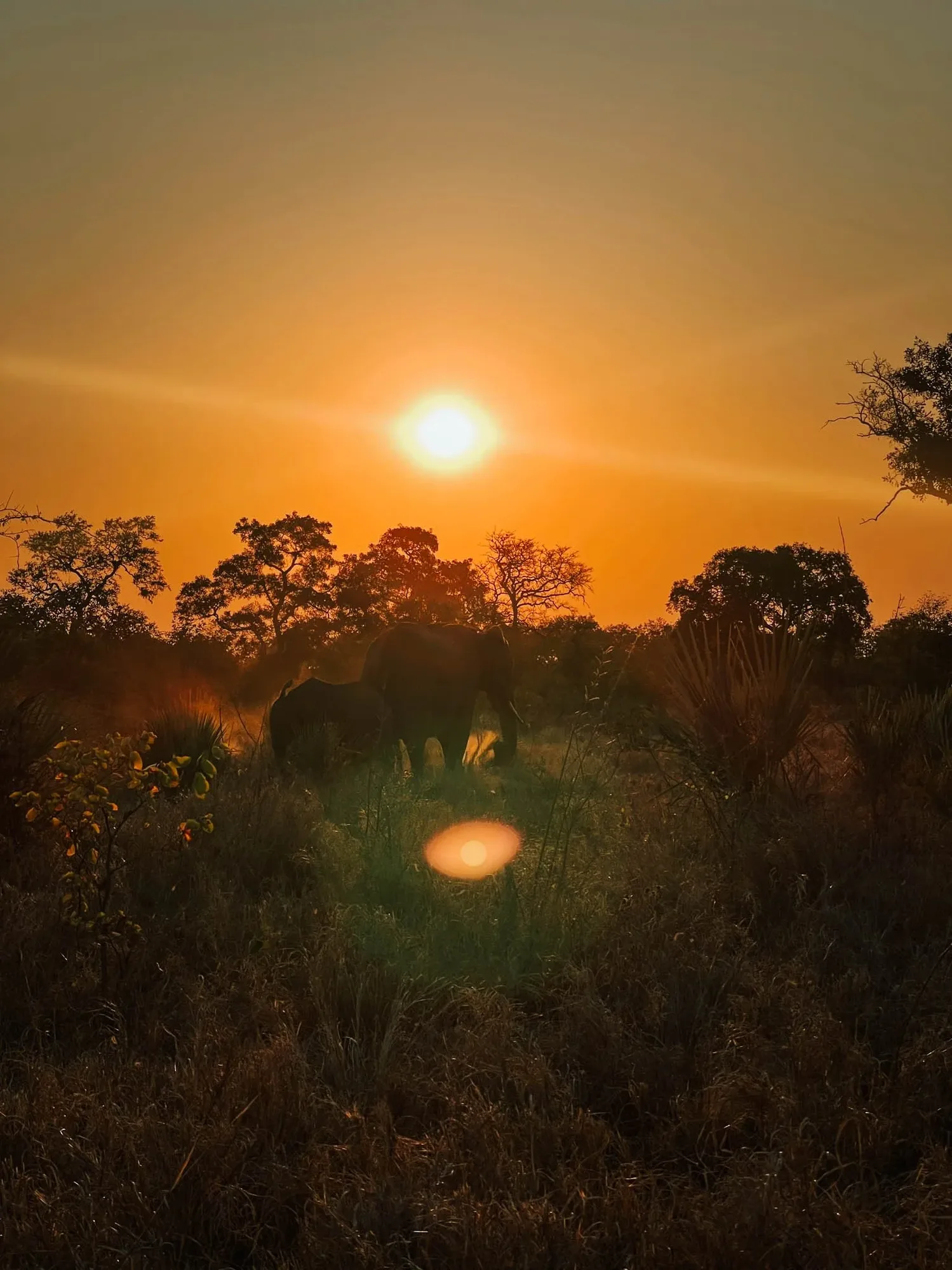
If there's one thing the animals of Kruger National Park have in common with Evelyne and Frank, it is that they love the sunset and the sunrise, where the light is golden, the air is fresh and the colors particularly bright. This is the best time to watch animals.
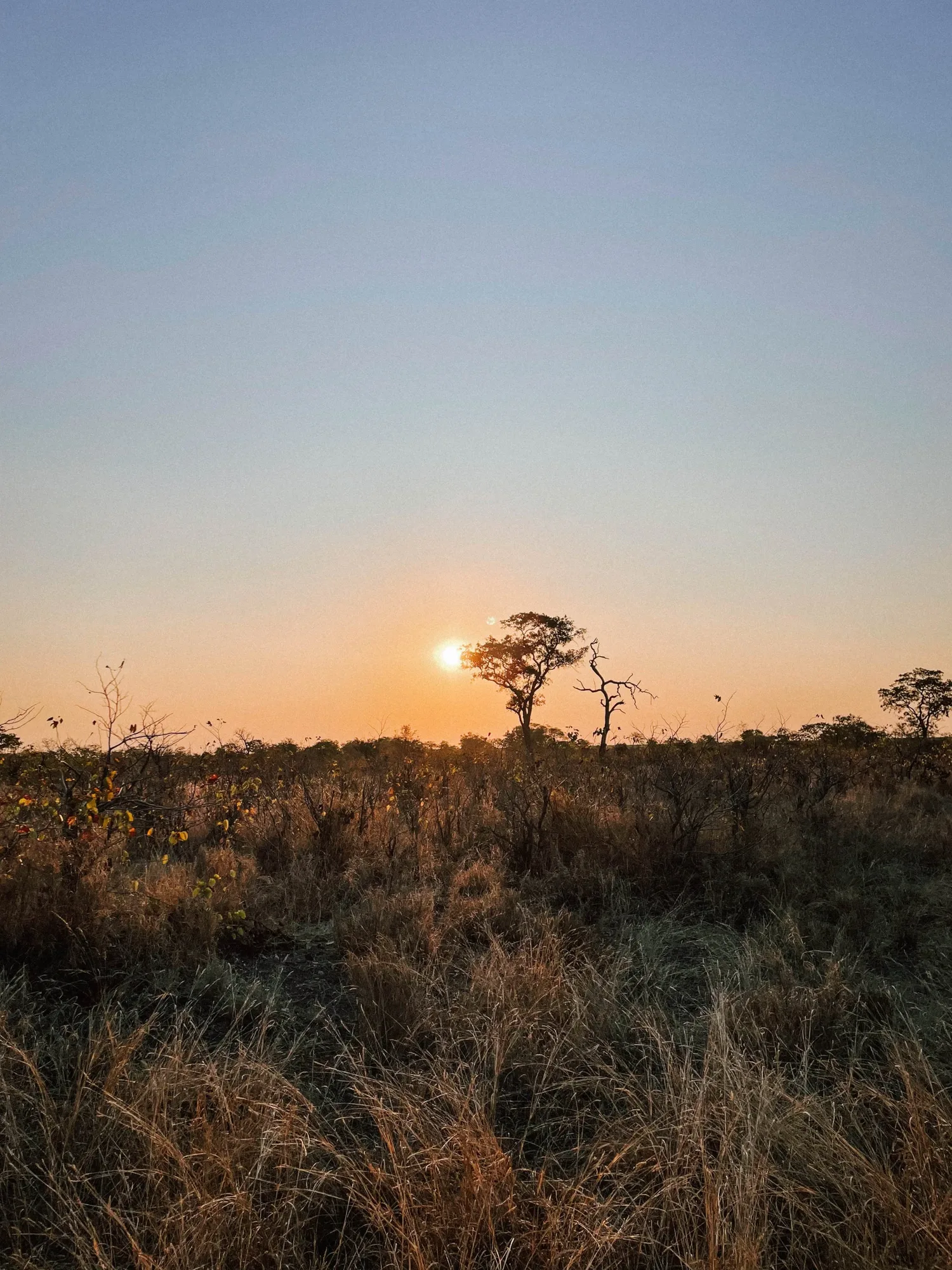
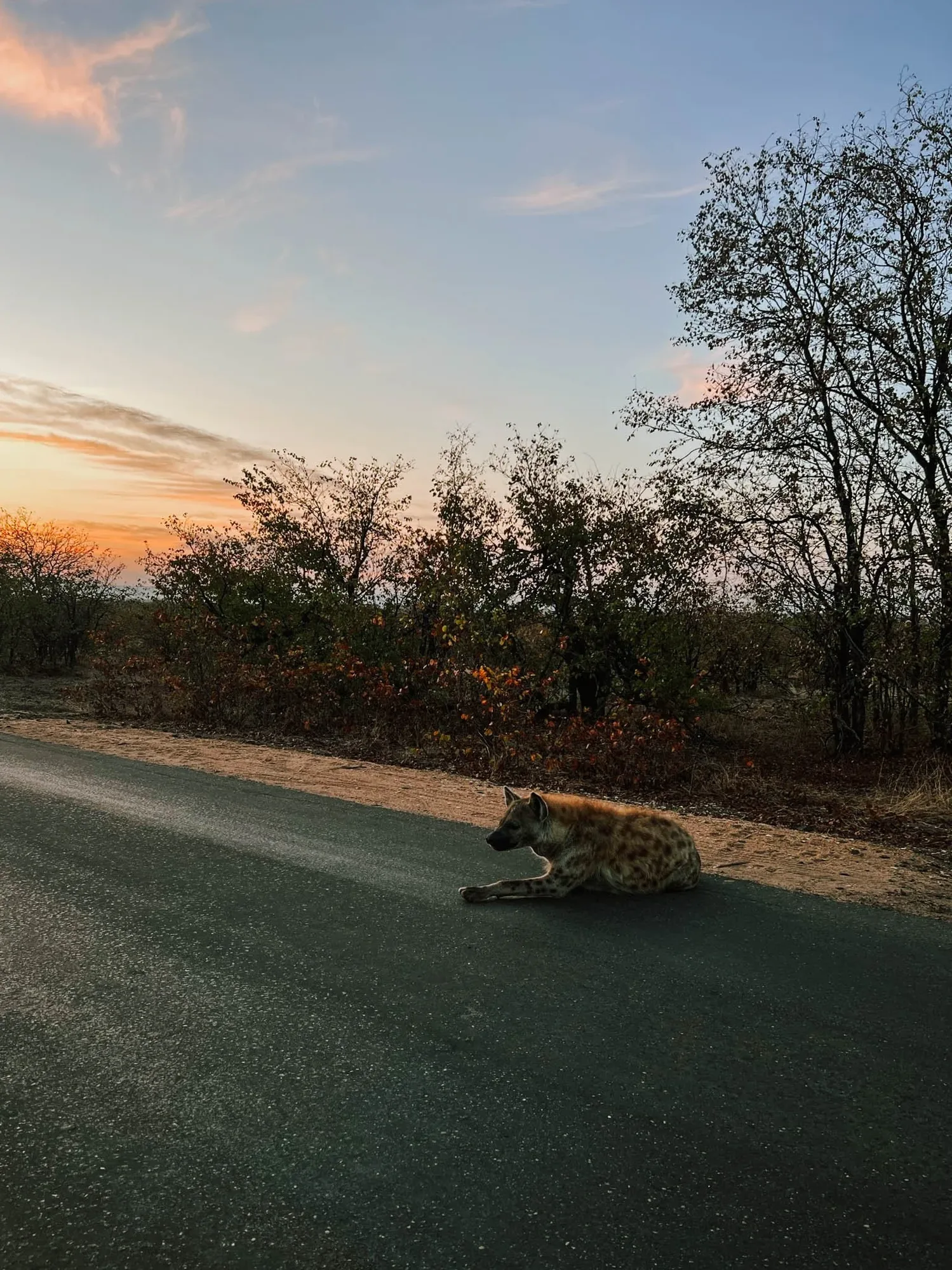
At the beginning and very late at dusk, you may be lucky enough to spot hyenas, jackals and wild cats. It's best to drive out as soon as the gates open to be the first. The Big Five can also be seen during this time.
Tip: standing cars & findings. If you come across a bunch of cars standing, there's definitely something to watch. Talk to the other drivers - they're happy to tell you what they're seeing.
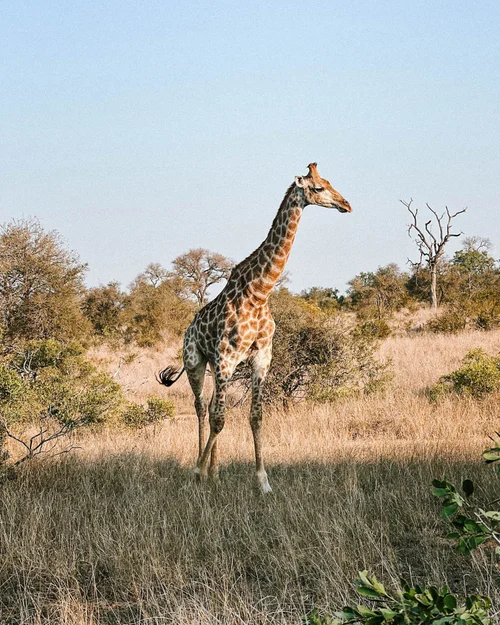
As it gets warmer, the hippos will move into the water, hyenas into their dens. Mostly, animals that are active during the day will remain. You will see lots of antelopes, zebras, giraffes, elephants, buffaloes and crocodiles in the water. If the hunger eats you in the morning, it's the best time to visit a "picnic area" nearby and enjoy breakfast next to crocodiles and hippos.
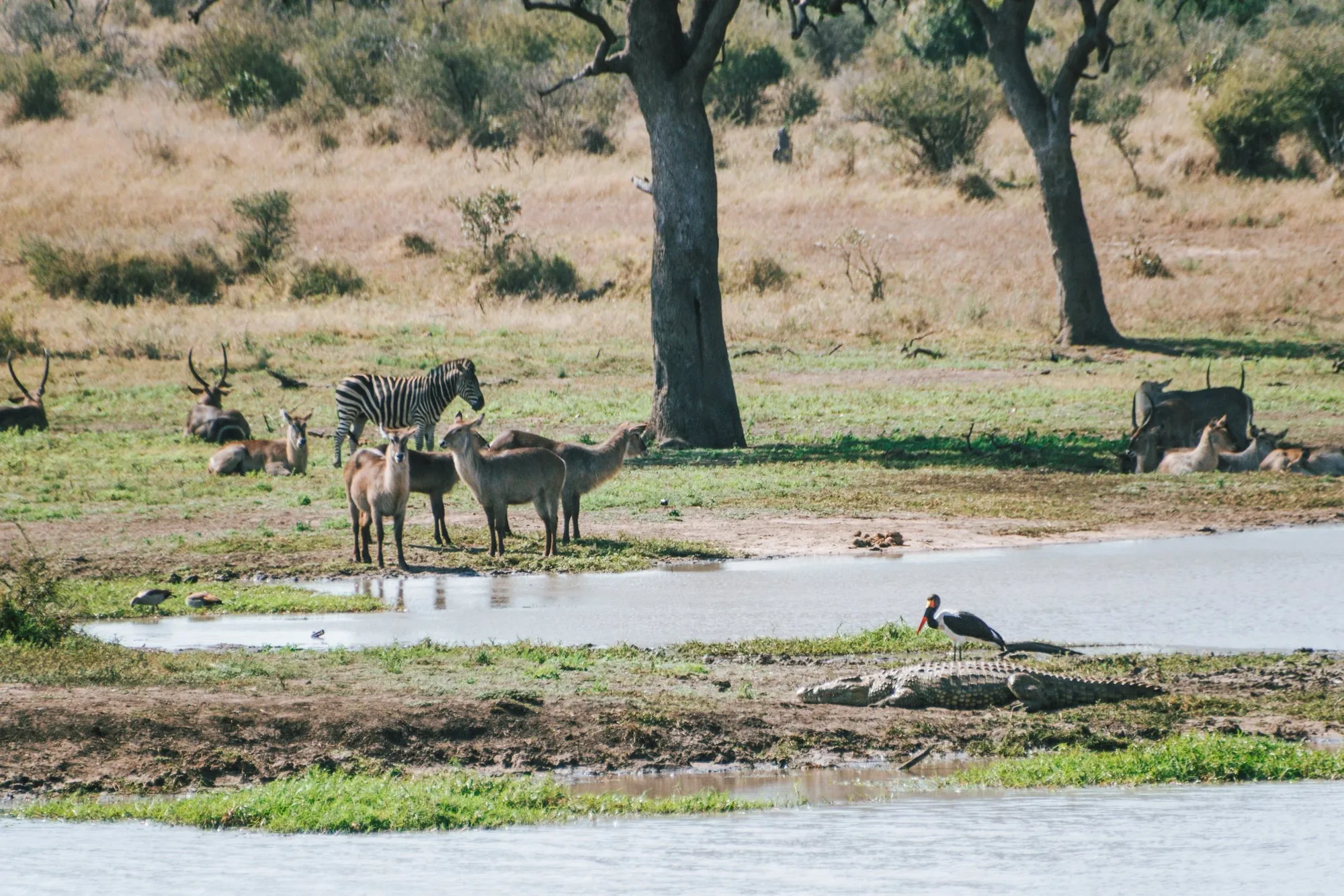
A high density of animals near the water. It is so much greener!
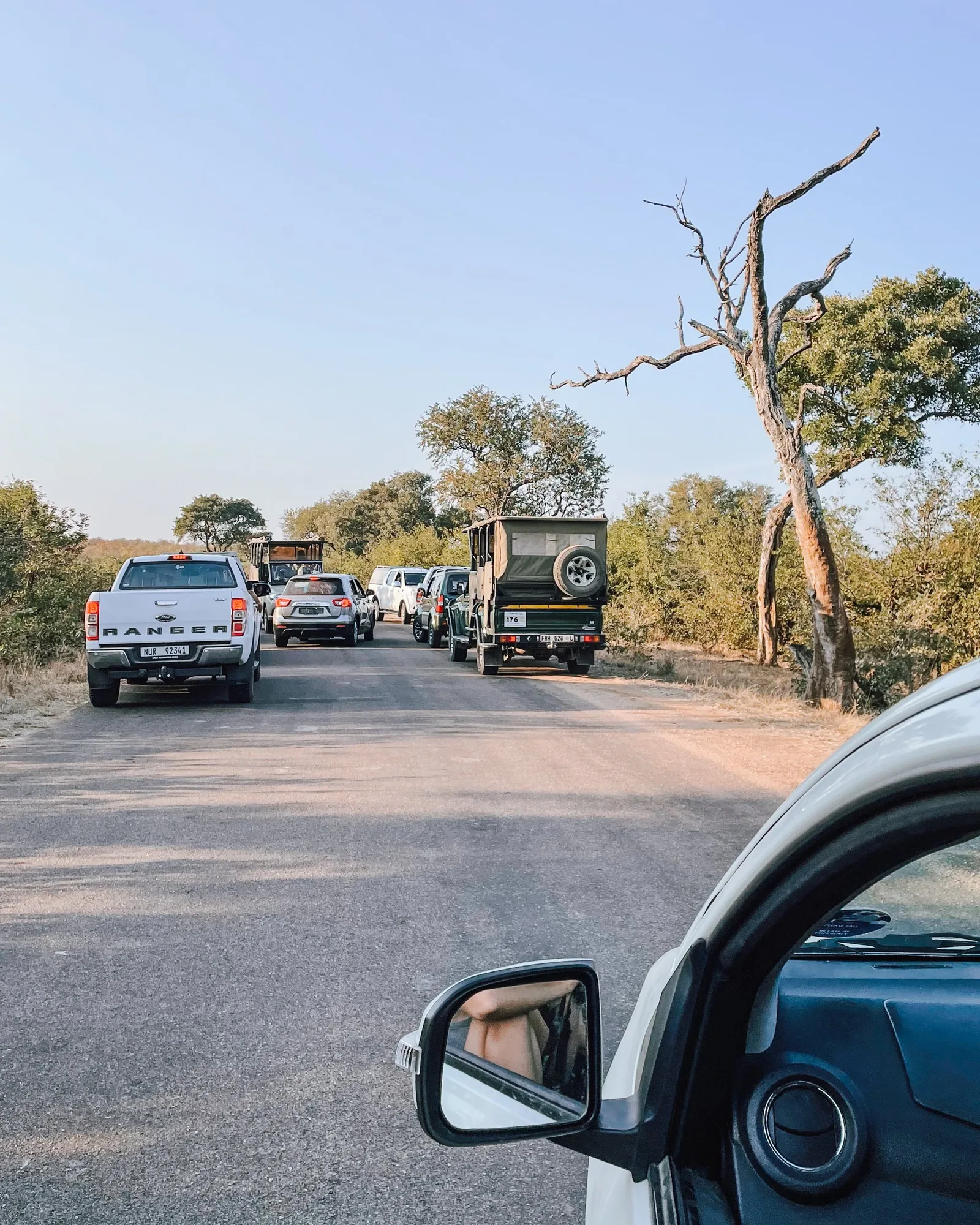
Standing cars is a good sign that something is going on
Tip: water holes. Bodies of water and "water holes" are particularly interesting. If you observe closely, you'll find terrapins, hippos, crocodiles and a lot of thirsty animals coming to drink.
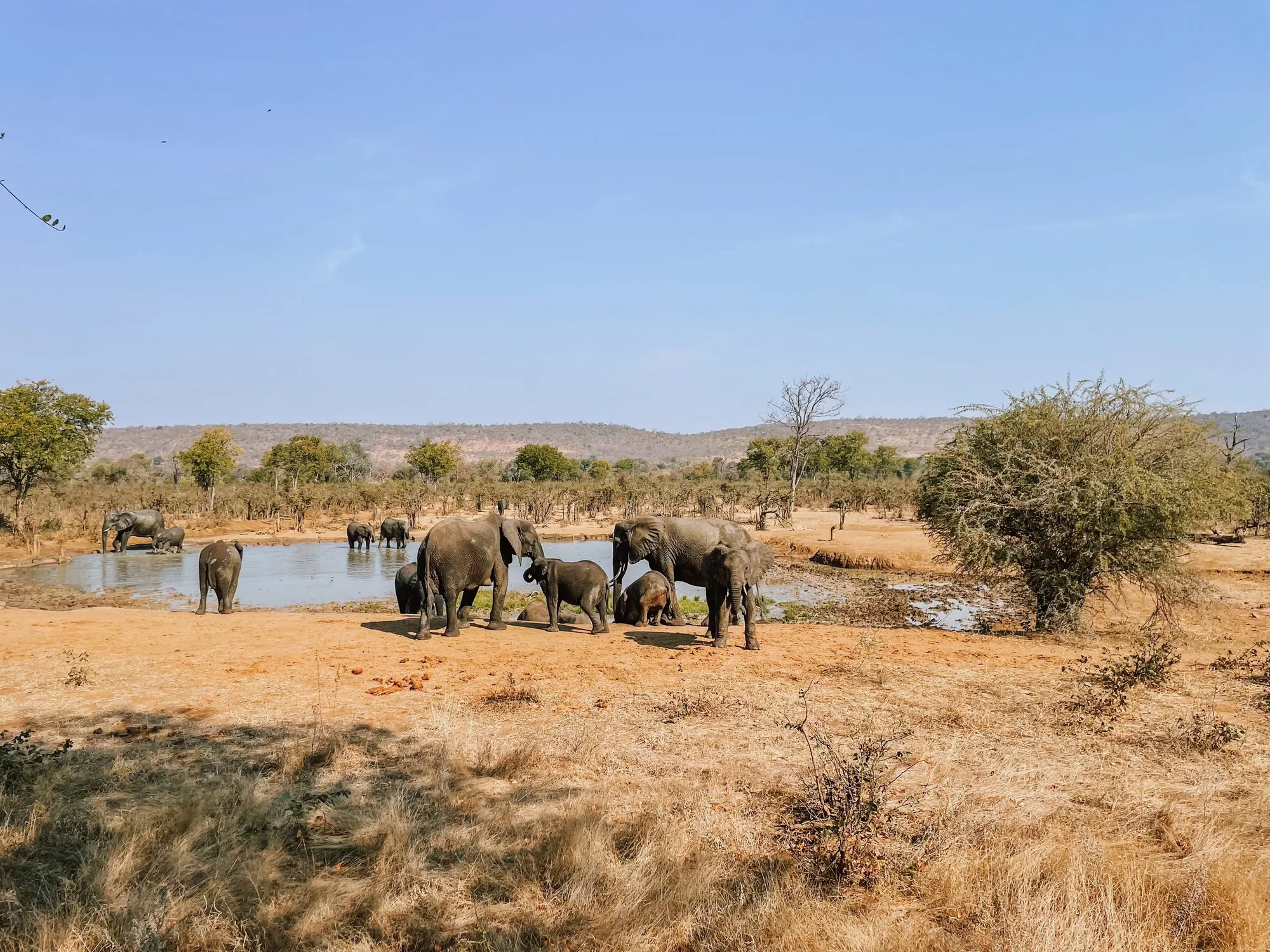
Elephants drinking at a water hole. It can be seen from the hideout inside Punda Maria Rest Camp
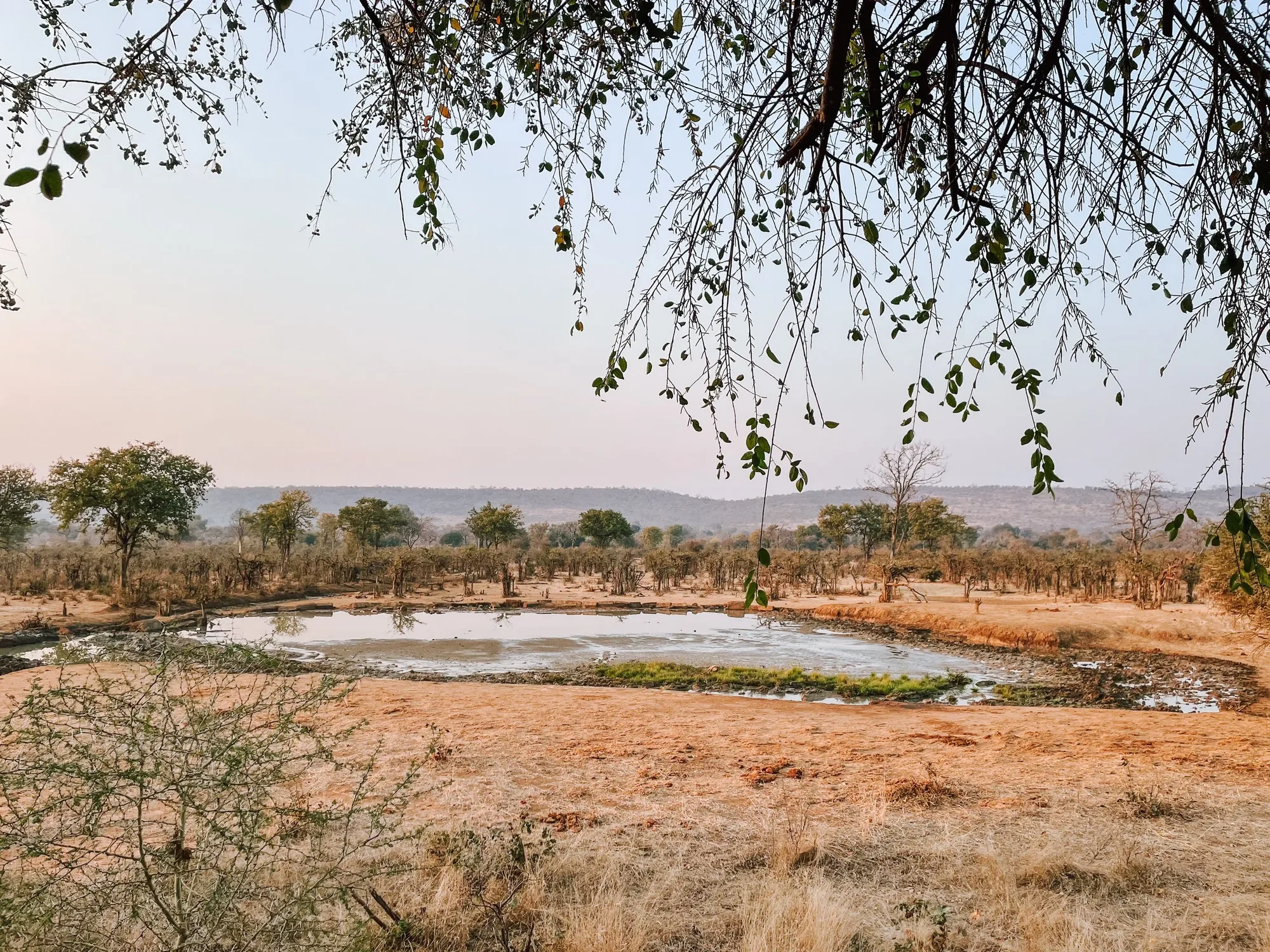
Same water hole, different time of the day after the elephants left
It gets very warm at noon. Animals like to hide under trees at this time and there's not too much going on out there. You can use this time to change camps, check in, set up your tent, or if you stay, enjoy the pool at the rest camp.
Tip: sighting boards. In rest camps and picnic areas, you'll find sighting boards where people locate their observations. We saw a lot through this - for example, leopards like to stay at the same place all day long.
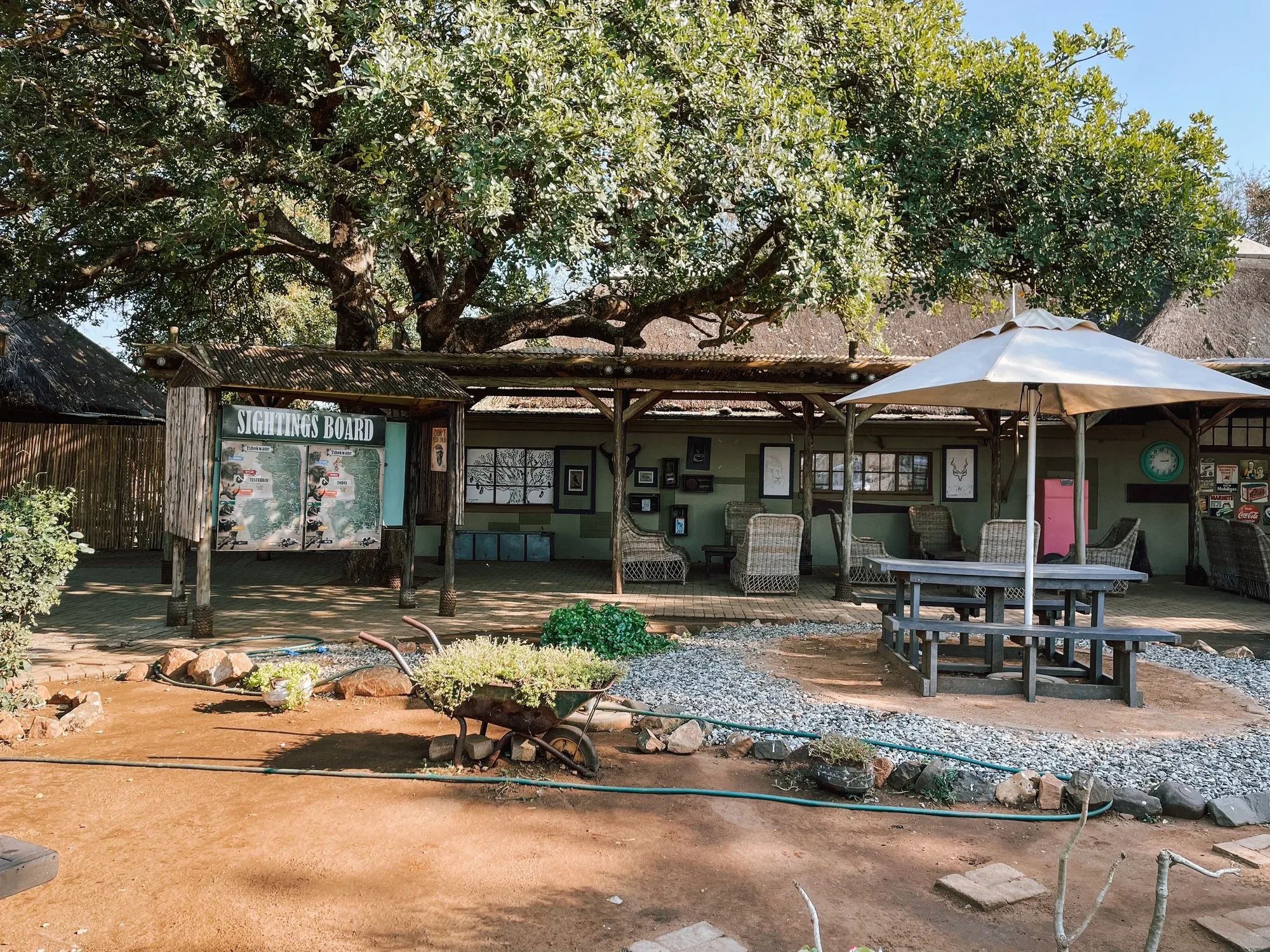
A rest area with a sighting board
Most camps have a communal pool, a restaurant for lunch, a shop, and many squirrels and guineafowls to sweeten the time in the camp.
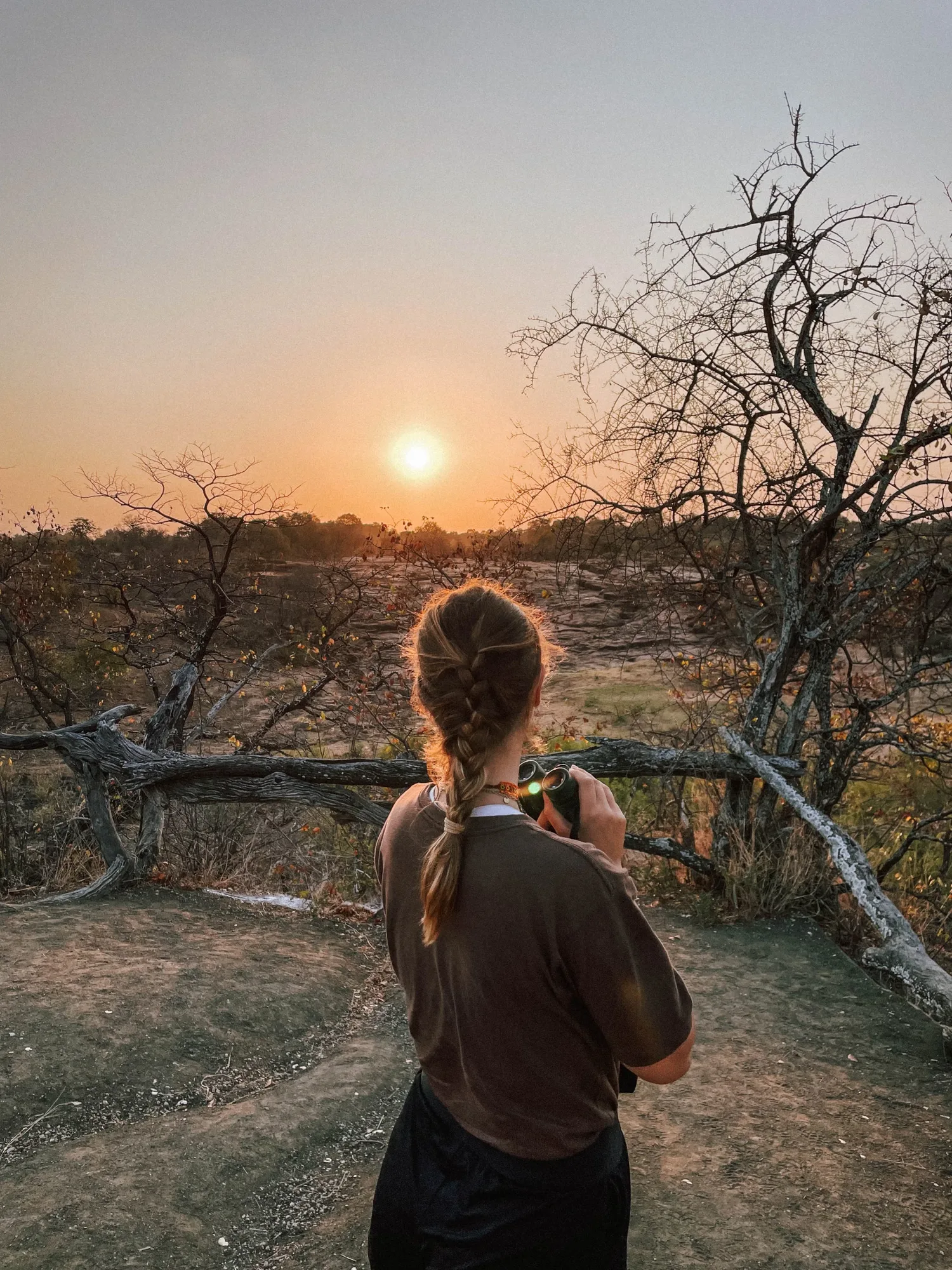
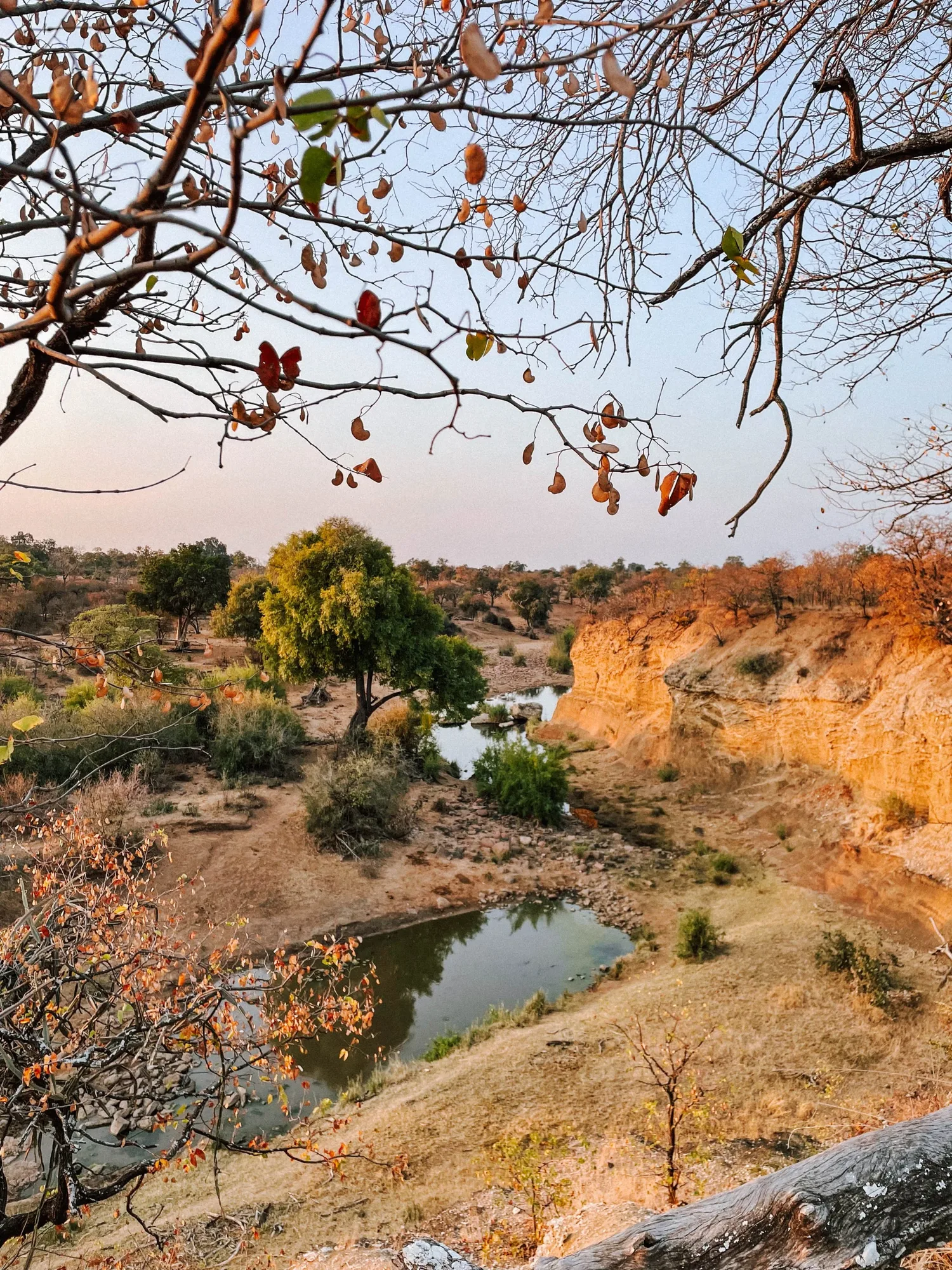
A view point in Kruger National Park near Shingwedzi
We mostly set off for the afternoon drive around 2 pm. You have plenty of time here to find all the animals you've always wanted to see and document on your booklet. But keep in mind that the rest camp gates close on time, so plan your route so that you can come back comfortably to the gate of your camp. Exceeding the time will result in a fine.
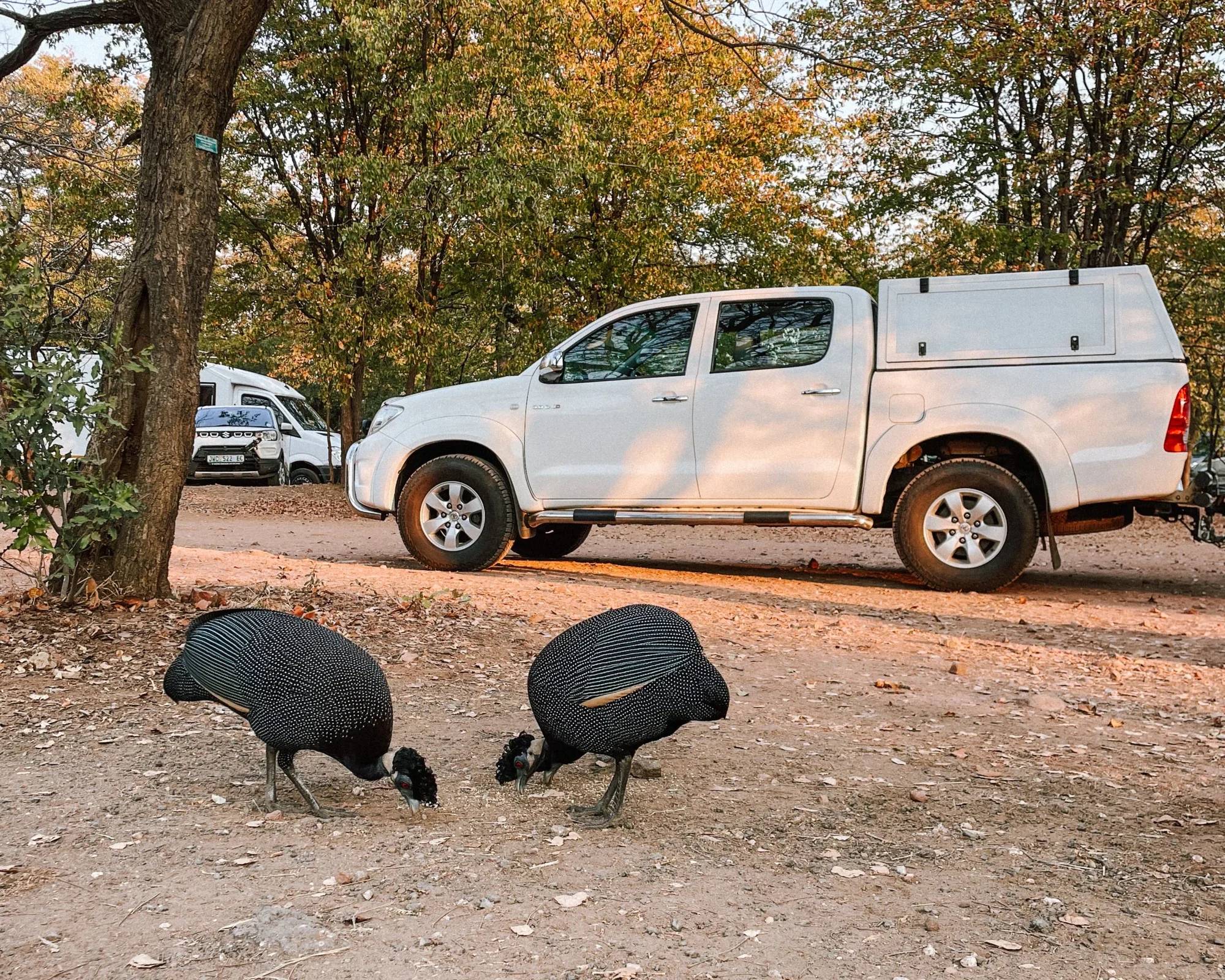
Crested guineafowls in Punda Maria Rest Camp
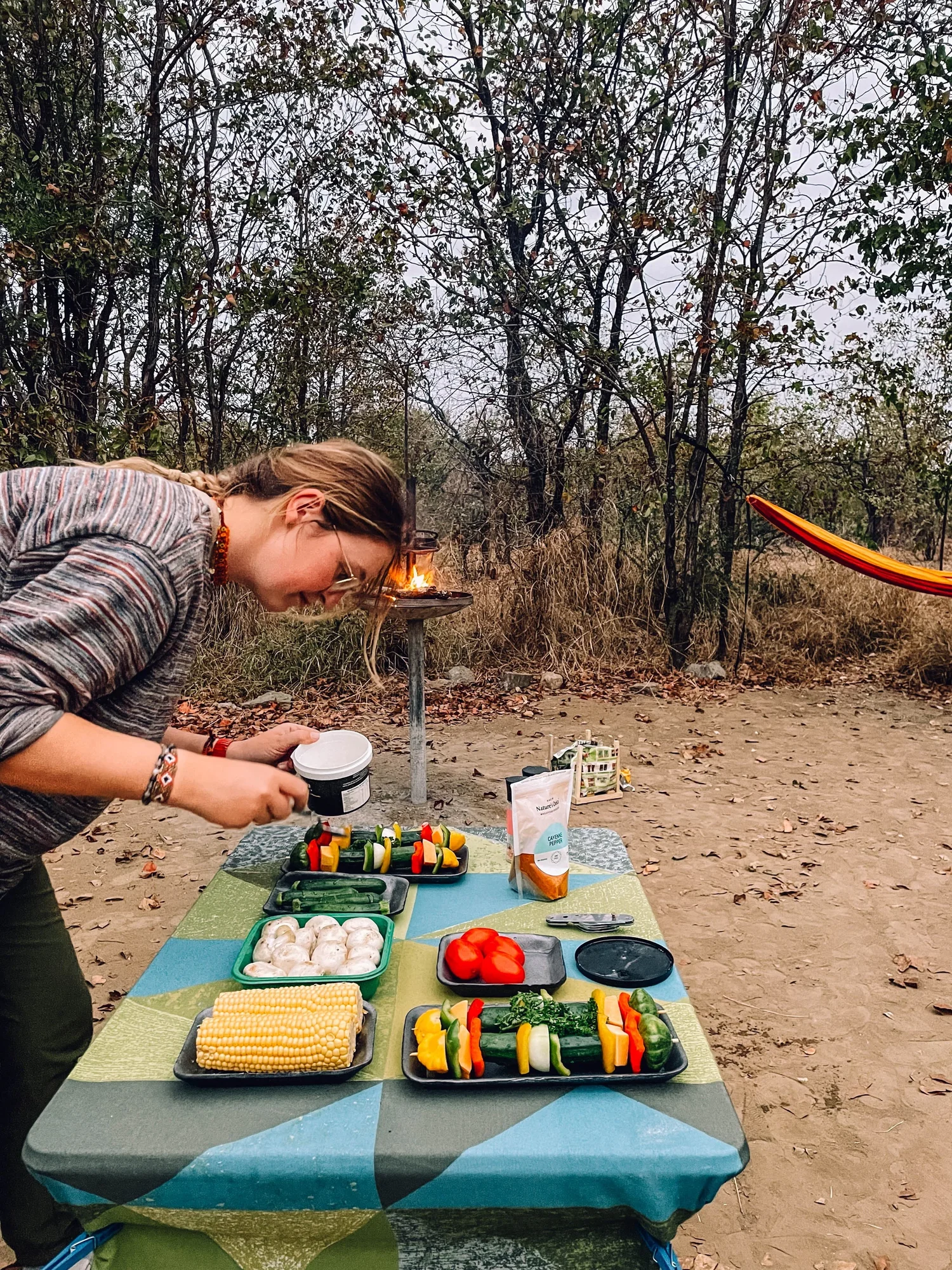
A vegan braai
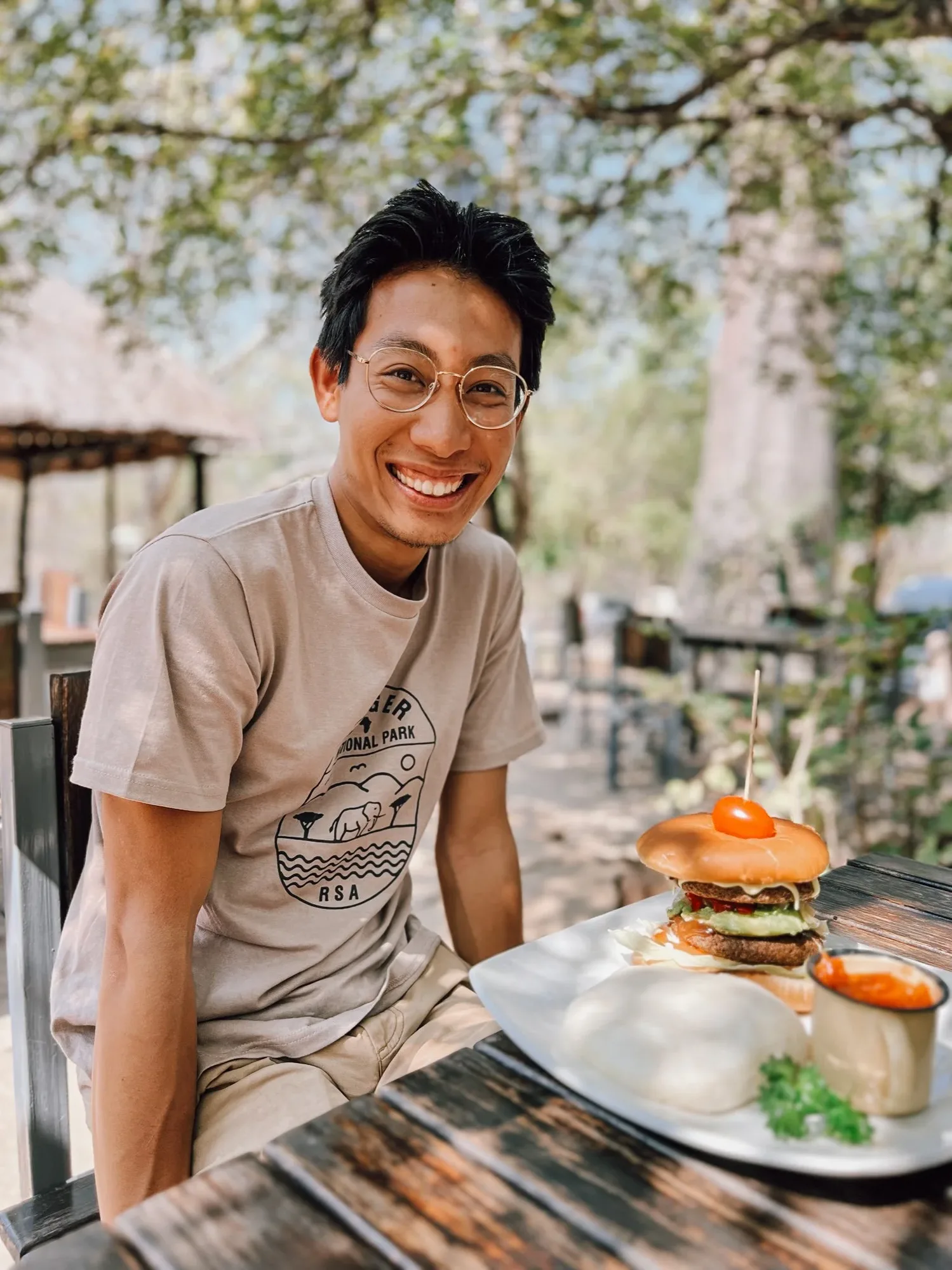
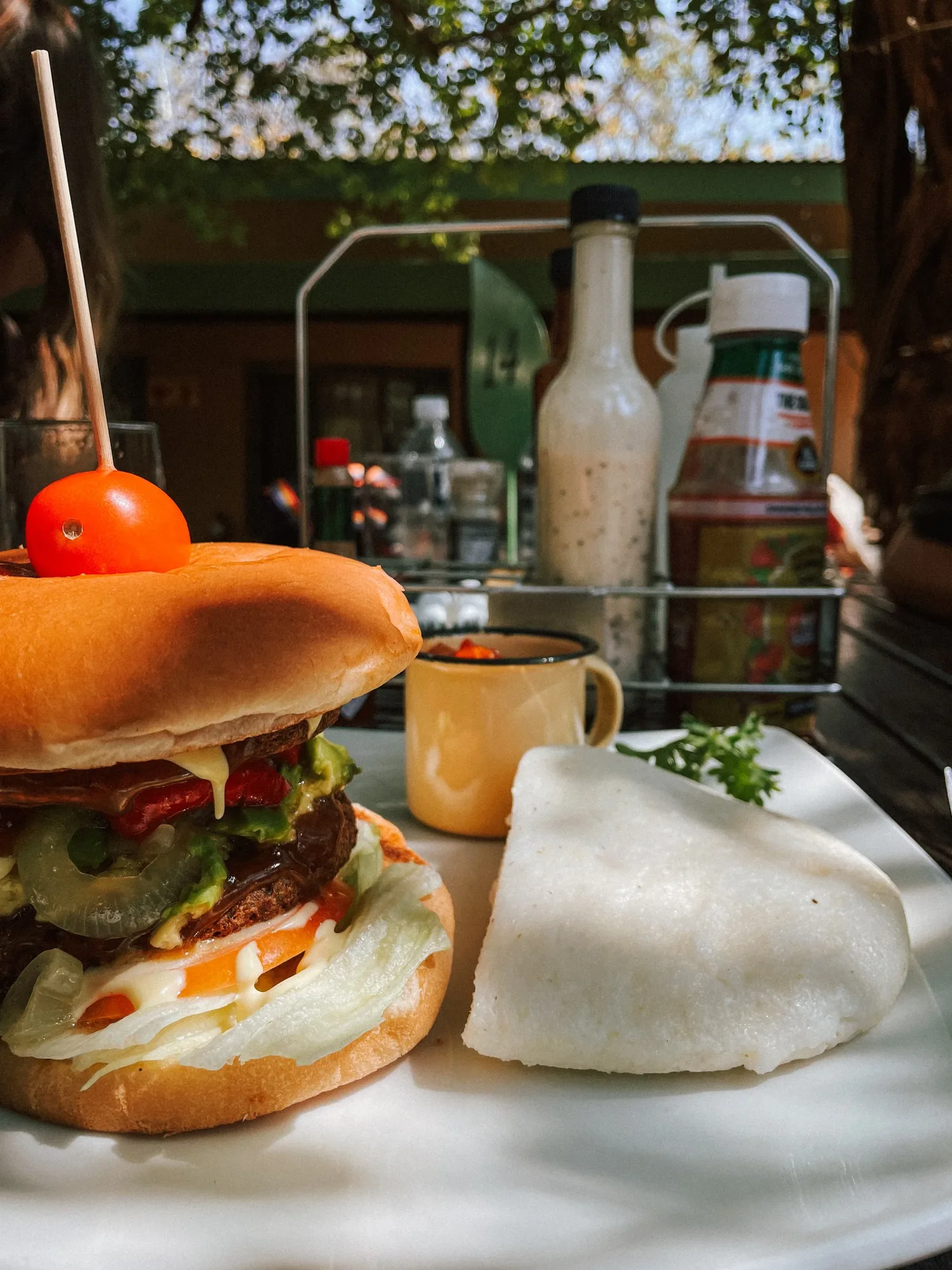
Arriving at the camp, you now have plenty of time to shop for souvenirs and groceries at the park shop. You can also host a traditional South African braai and enjoy the warmth by the fire, cook food with stove and pan, or if the camp is big enough, go to a restaurant. We were happy about the vegan and vegetarian options available.
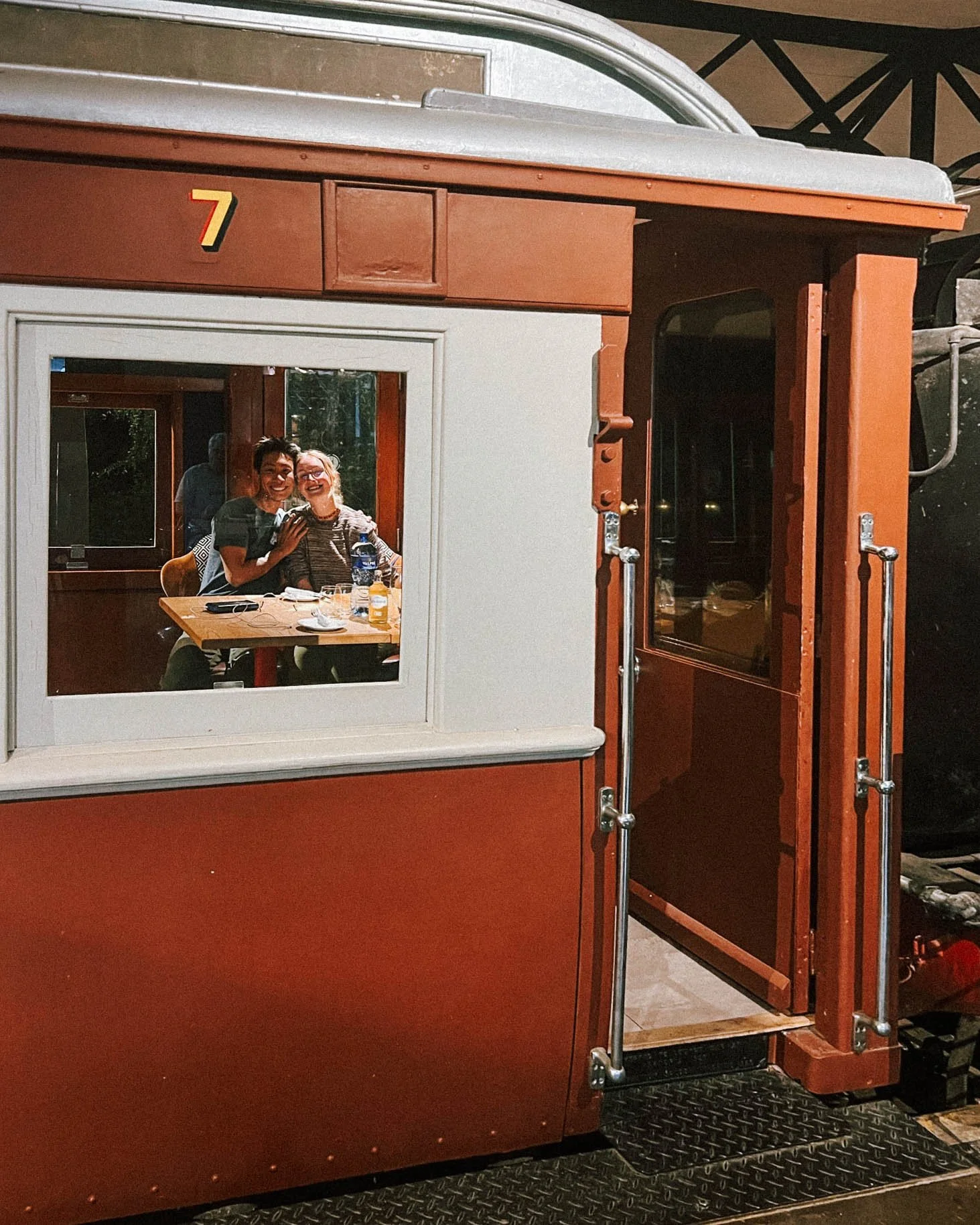
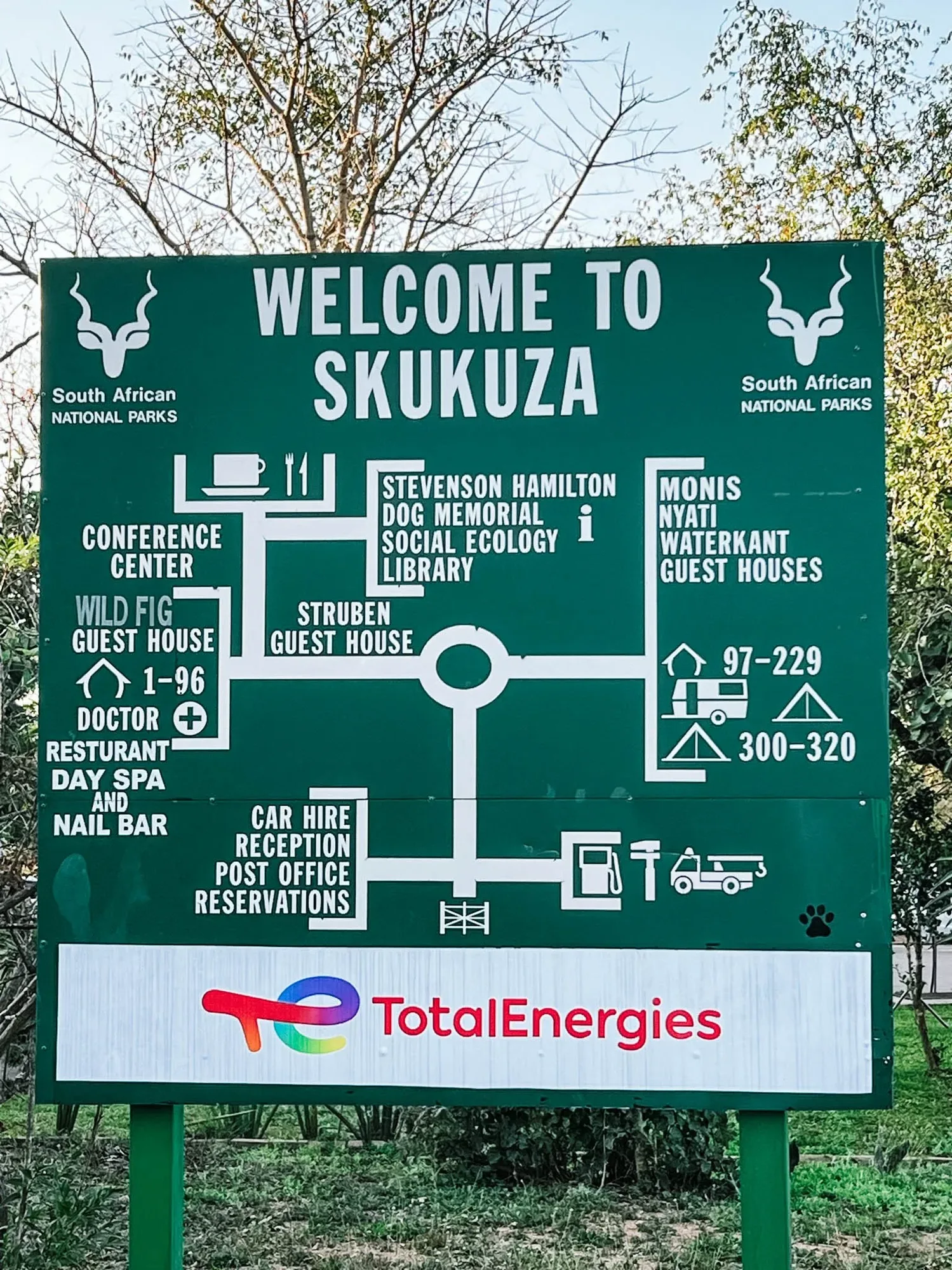
Tip: restaurants and patience. Restaurant food in South Africa can take some time. We once spent over an hour waiting. Since this is more the rule than the exception, a relaxed mindset often helps - and some snacks if you are really hungry. The biggest highlight for us was a restaurant in a train at Skukuza. The vegetable platter and the pizza are amazing.
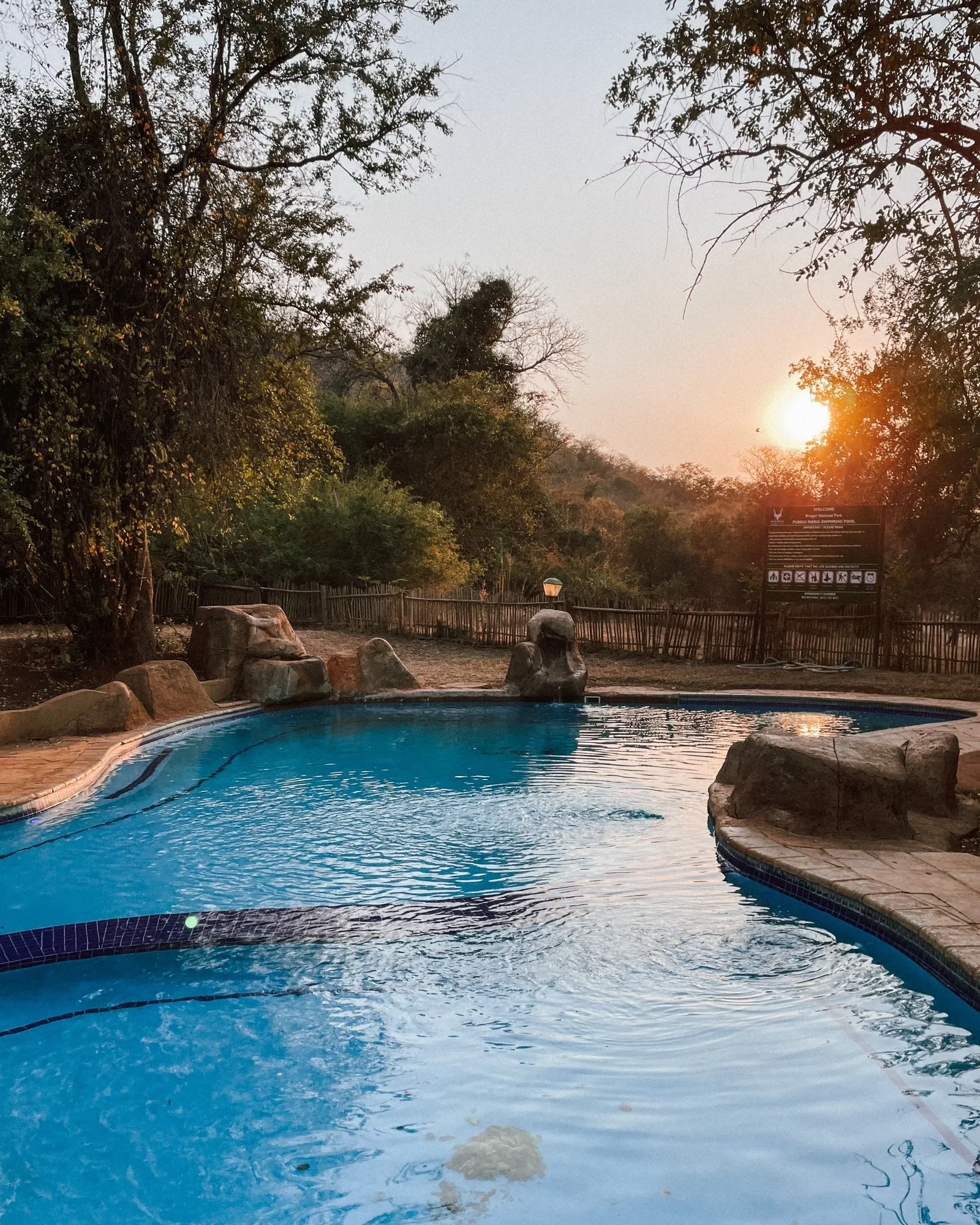
The communal pool at Punda Maria Rest Camp
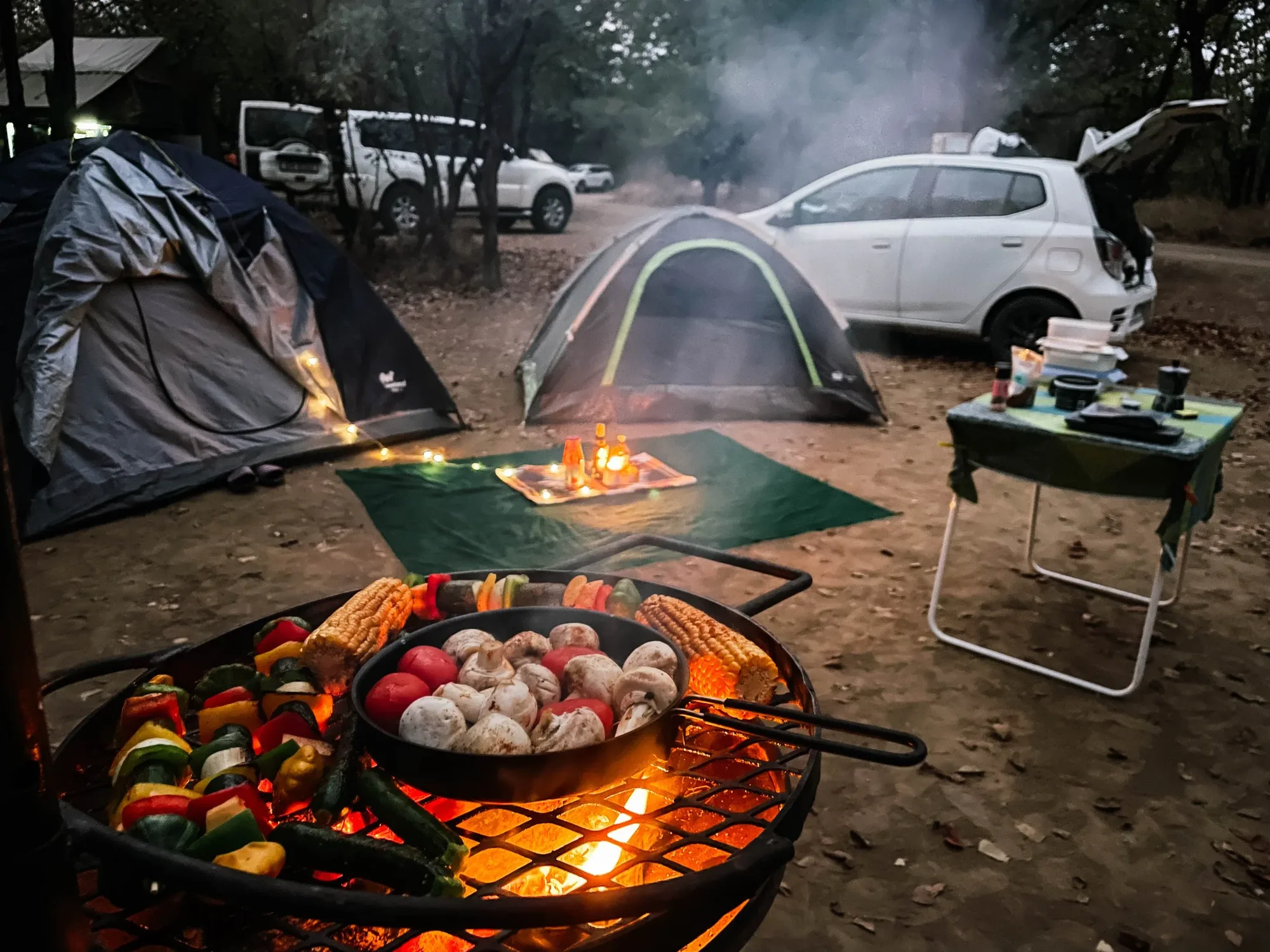
After a dip in the pool, it's time for a braai
The Rest Camps
The rest camps in Kruger National Park couldn't be more diverse. Depending on their size, a rest camp offers three different types of accommodation, all of which we have experienced.
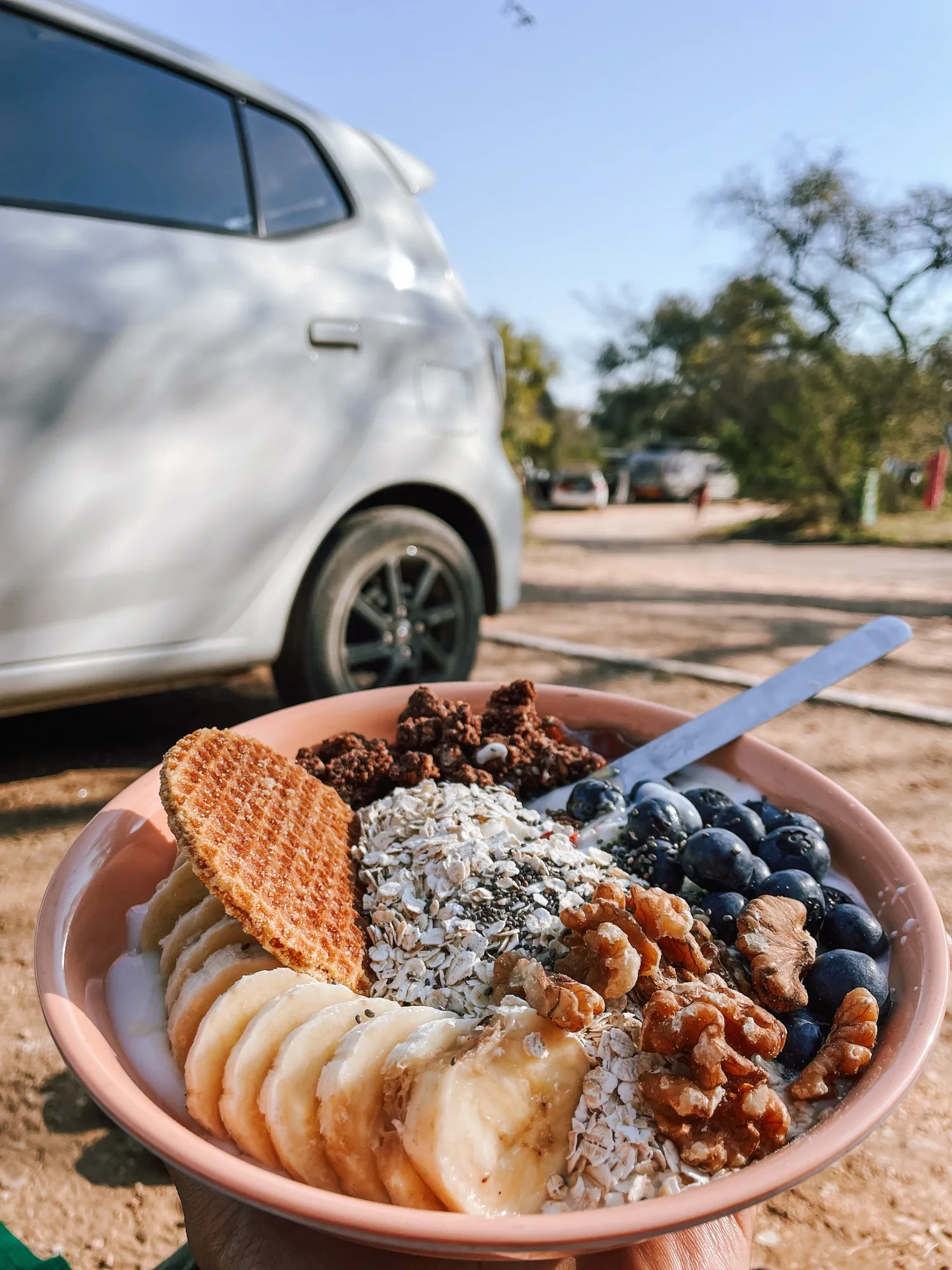
Campsite romance: a granola bowl with fresh berries and a stroopwafel
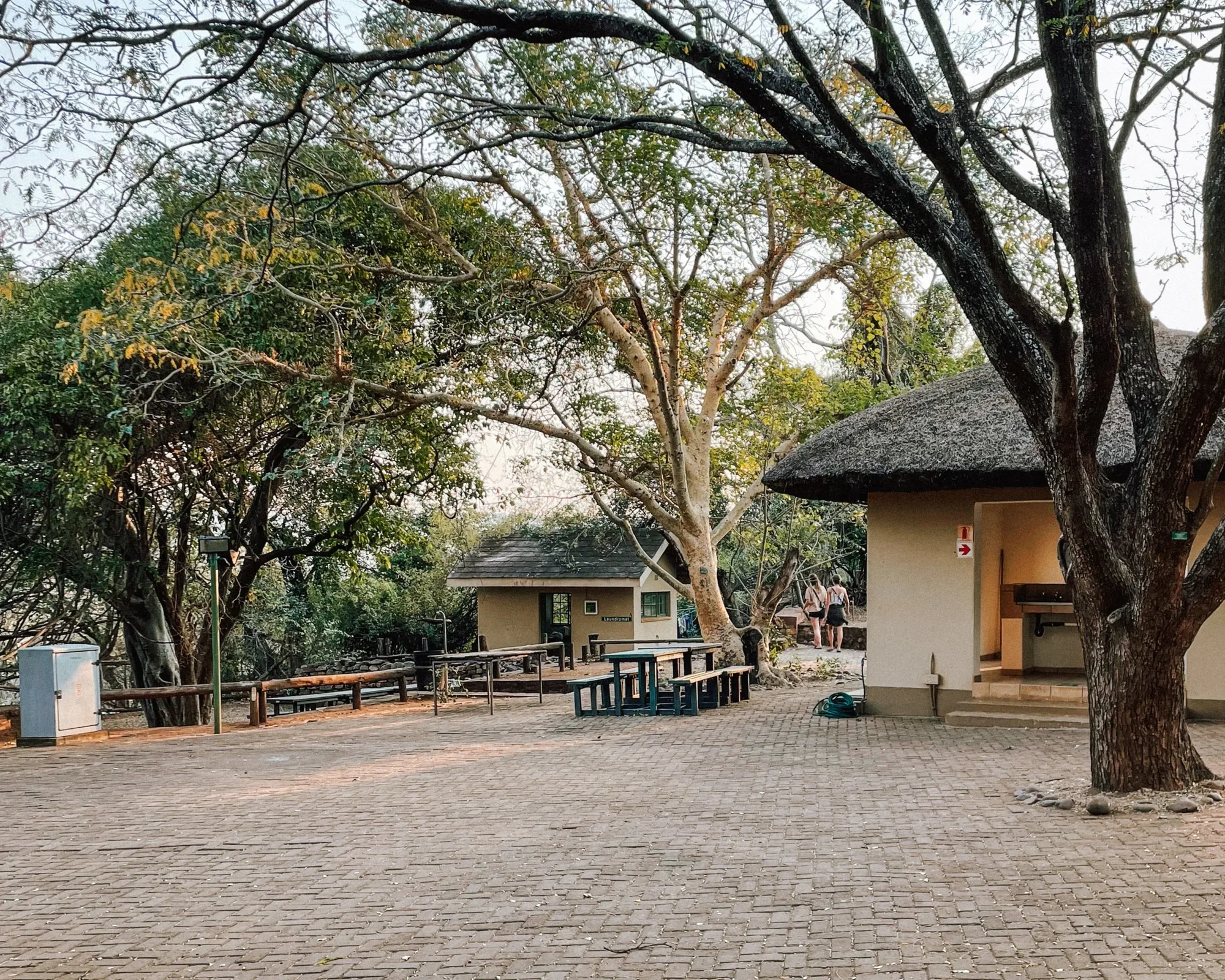
A typical rest camp in Kruger National Park. The communal kitchen can be seen on the right
- The camp. A perfect place to sleep under the starry sky and hear the animals at night. Motorhome, tent, bush lapa, everything can fit in here.
- The safari camp. A stationary tent with a bed. Comfortable, yet still close to nature.
- The bungalow. The comfortable accommodation with a bed, private bathroom in a stone cottage.
A few private lodges offer their luxurious accommodations inside the park, including game drives with a private guide. The prices for these have no limits.
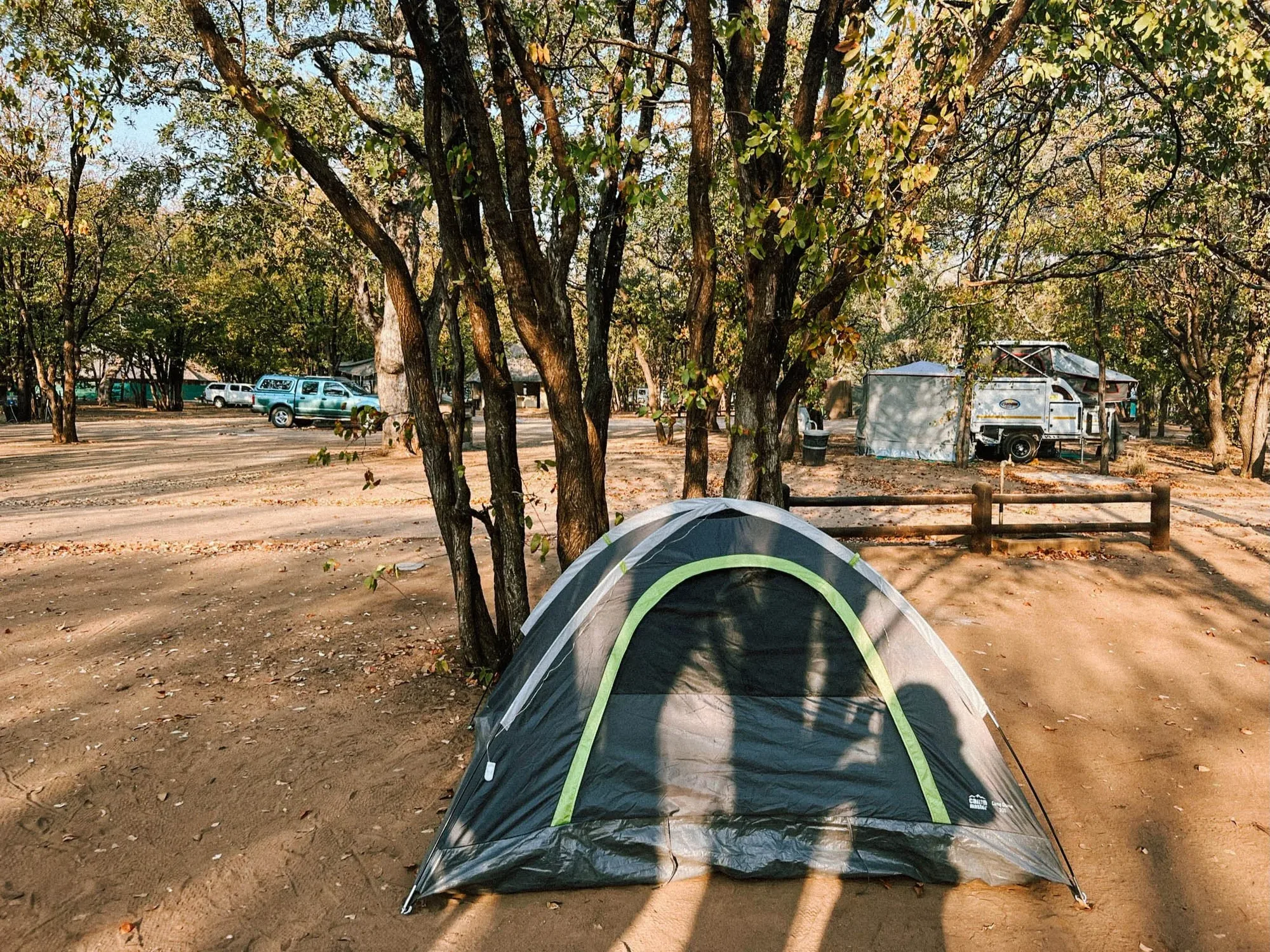
The Camp
Camping in South Africa reminds much more of camping in North America than camping in Europe. You have plenty of space, your own, mostly private parcel, and usually drinking water and a grill for your perfect braai. Within your price category, you can choose your favorite spot to settle, but they work on a first-come-first-serve basis.
In all camps we visited, there was a communal kitchen and sinks, where there was either a gas stove or an electric stove. Occasionally, you might also find a microwave. The camp toilets are equipped with hot water for a warm shower - pure luxury! In some camps, you can also use the washing machine and dryer for coins.
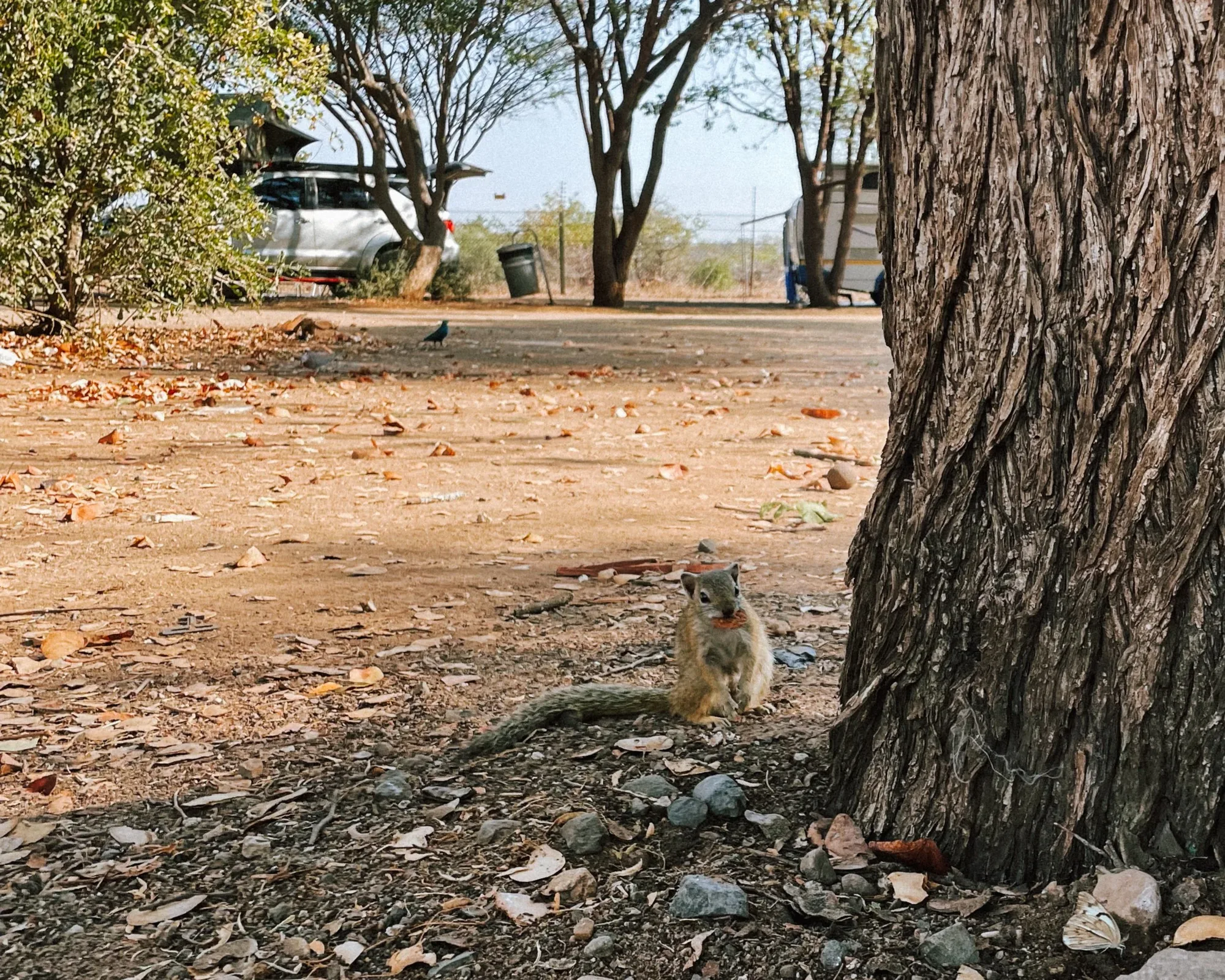
An innocent-looking African bush squirrel in the camp stealing cookies!
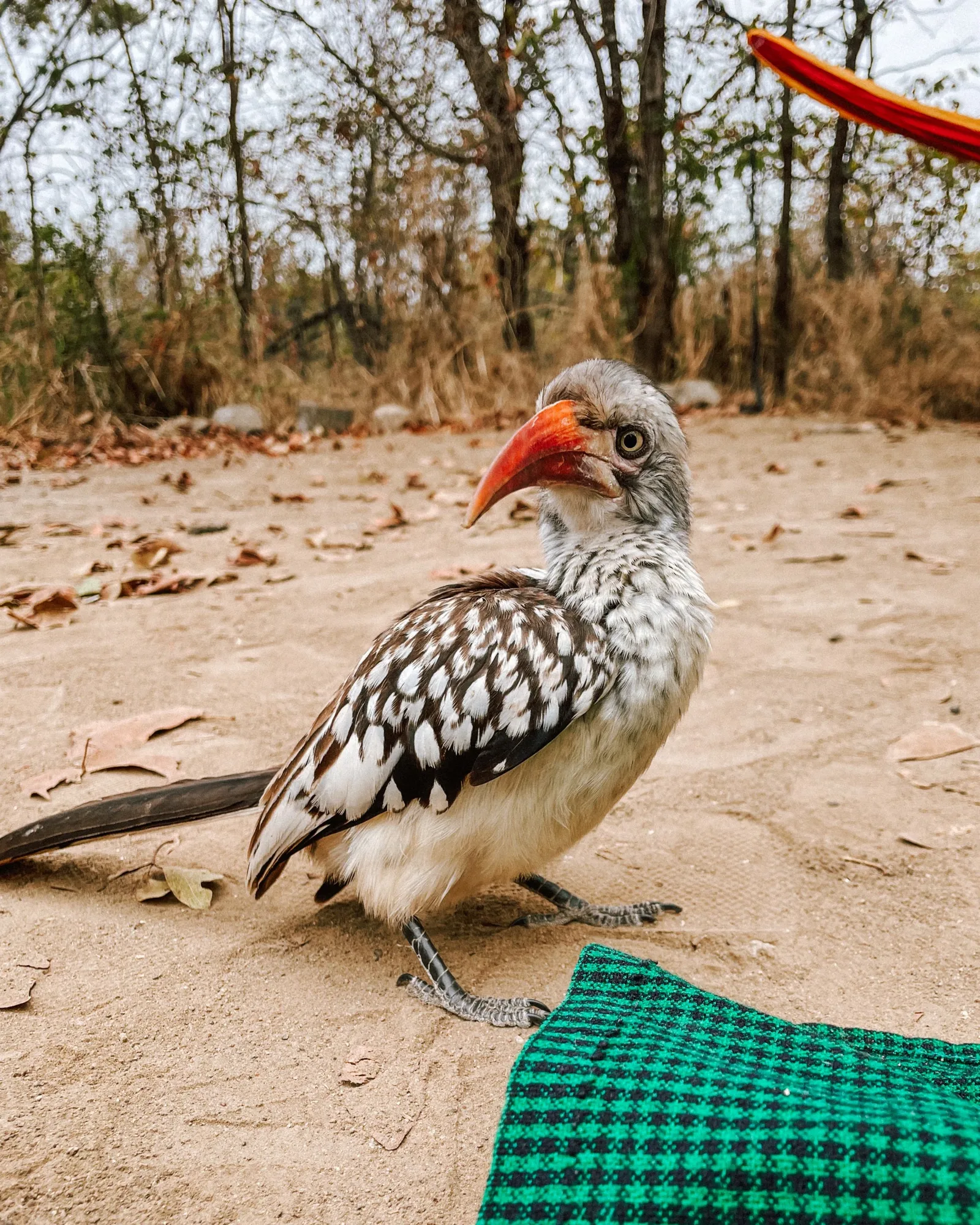
A red-billed hornbill in our camp. Other frequent visitors are guineafowls, bullfrogs and laughing doves
Tip: camp convenience. If you're not driving the ultimate self-sufficient camper - like us with two tents - choose a spot near the toilet and the kitchen.
You don't have to leave the national park to prepare delicious food. In addition to souvenirs, the park shops offer a basic selection of fresh and durable food items, wood and camping equipment.
Our personal favorites were Tsendze Rustic Camp, Punda Maria and Berg-en-Dal.
The Safari Camp
Our safari camp at Tamboti had a terrace and a view of the dry river in the dry season. At night, we encountered an African civet on our private stone entrance.
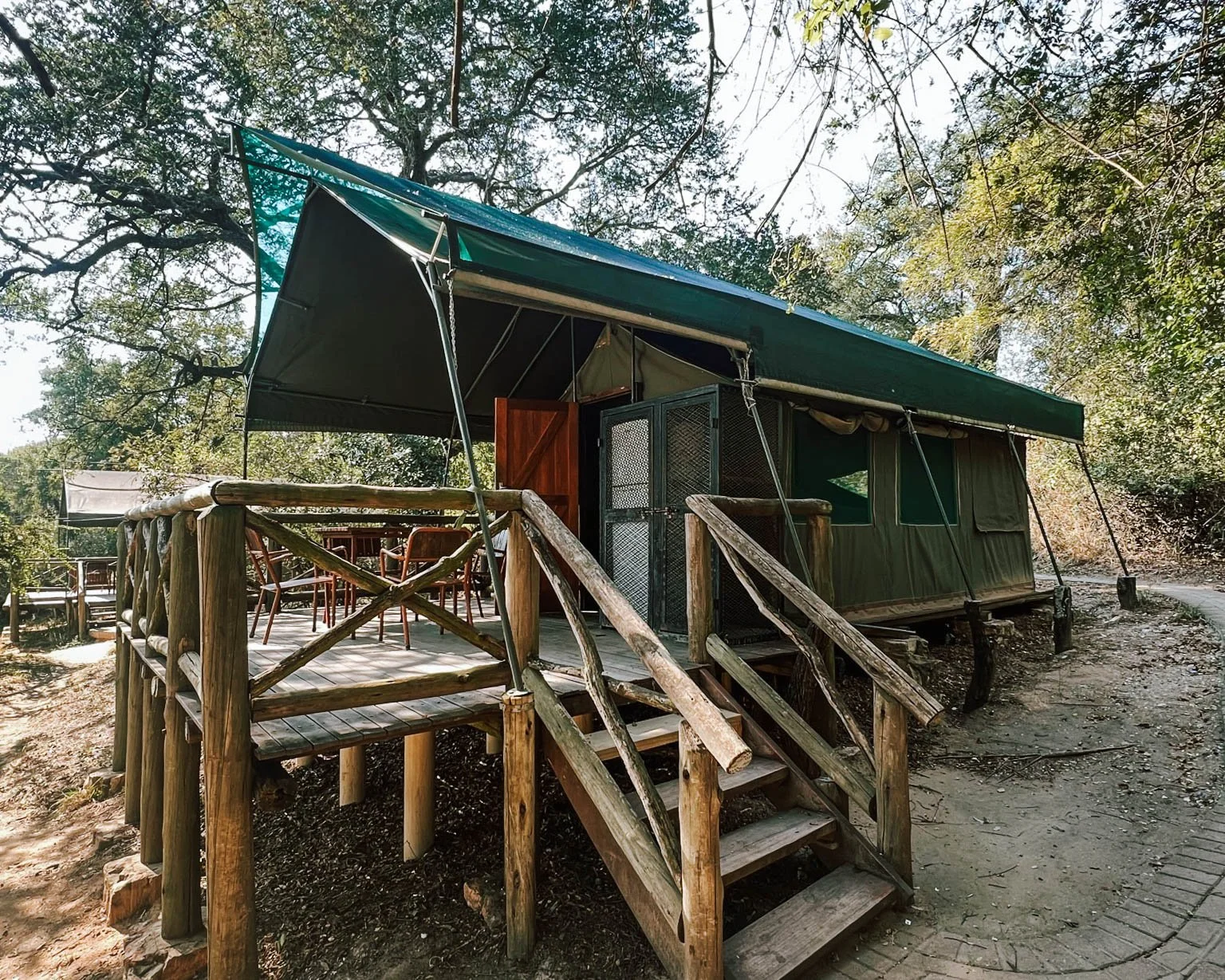
The terrace and the safari camp at Tamboti Tented Camp
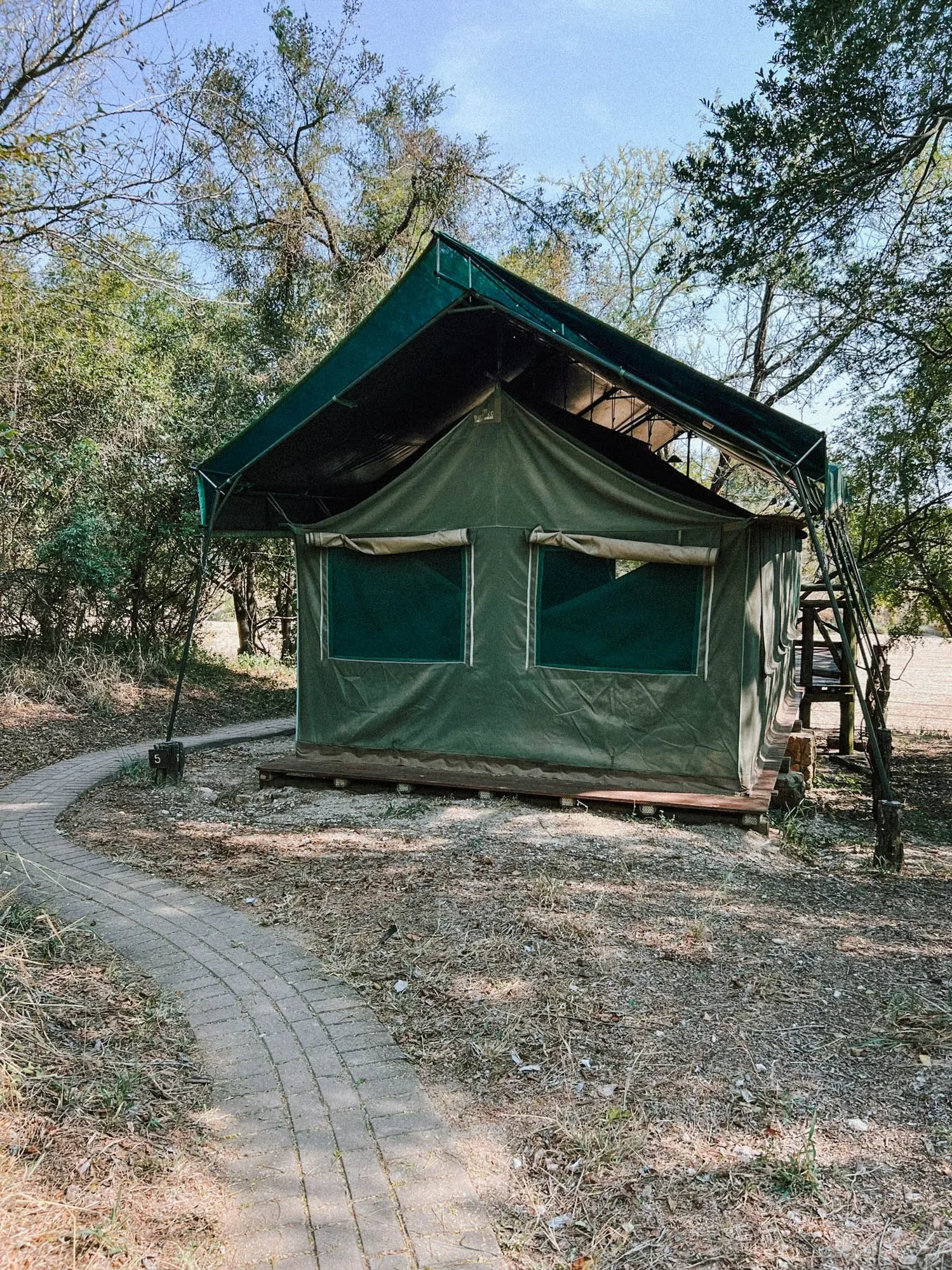
Entrance to our safari camp
The Bungalow
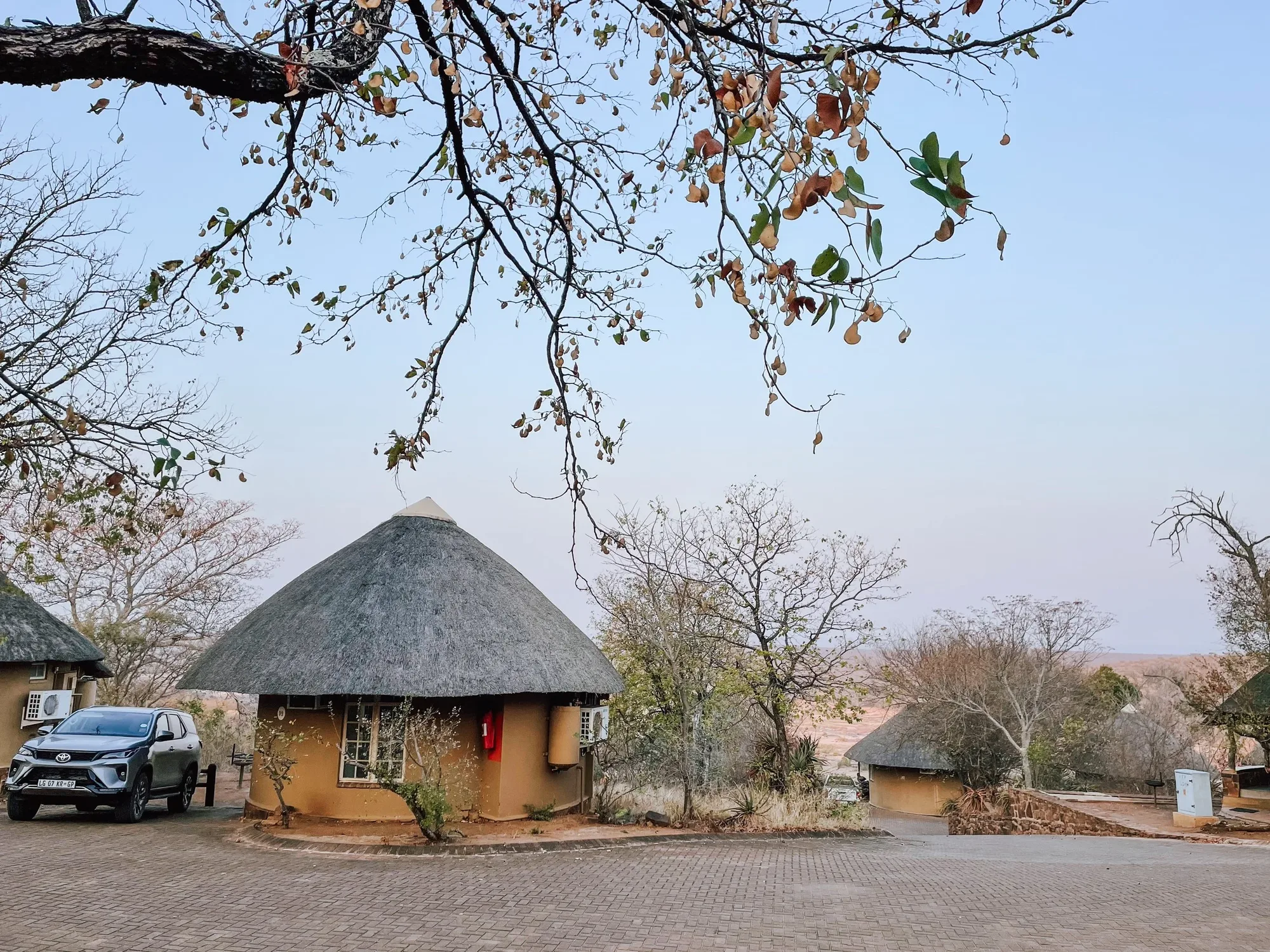
A bungalow, Olifants Rest Camp
The most comfortable option with the most luxury. We wanted to experience nature as closely as possible - hear everything. Honestly, this was our least favorite option.
How Much Did We Pay?
The costs in the national park can be divided into the following categories: the conservation fee, accommodation costs, transportation costs and meals.
Wild Card and Entrance
As of now, the park entrance fee is ZAR 460 per day for international guests. That's quite a lot of money, which is why the Wild Card is already worth it after a few days, costing around ZAR 3780. The Wild Card is also valid for other South African national parks such as Addo Elephant Park.
Accommodation
Accommodations in the national park are not expensive, especially when staying in a camp.
- For the camp, we paid about ZAR 400. There's a variable surcharge per person.
- The safari camp costs about ZAR 1000. Ours theoretically had 4 spots.
- The bungalows were the most expensive. A bungalow for two costs about ZAR 1300.
Accommodations can only be reserved through the official website, sanparks.org. They must be booked in a logical sequence without any gaps.
Tip: book early. Bungalows, as well as tent sites, are very popular and almost always fully booked. We booked six months in advance and recommend it to everyone.
Transportation Costs
A well-known oil company benefits a lot from the circumstances, as there is a gas station of the oil company in every larger camp. Gas is expensive, about ⅔ of the price in Europe.
Food and Drinks
Restaurants are a bit more expensive than outside the national park. So if you prefer to save some bucks (and the wait), you should rather check out the park shops here. More sophisticated items like plant-milk should be stocked up on before entering the national park.
With 🐿️ by Frank (and Evelyne).
Useful Information
Feeling inspired? Here are some resources you might find useful if you would like to follow our footsteps:
- The only place to book accommodation inside Kruger National Park: sanparks.org
Written by
Engineer, barista & solar wizard
Frank likes lavender, fluffy bumblebees, golden larch trees in fall, and playing the guitar with just four chords.